

Does deep tissue massage actually work? For short-term pain relief, yes, and the evidence behind that is reasonable. For flushing toxins or clearing lactic acid out of your muscles, no. That has been measured and it does not happen. Knowing which claim you are buying changes what you should expect to walk out with.
At a Glance

| Short-term back pain | Works. Pooled across 21 reviews and 35,711 people |
| Long-term relief | The benefit fades, as it does for most back pain treatments |
| Flushing lactic acid or toxins | Measured and disproved. No change in lactate clearance or muscle blood flow |
| Muscle soreness after exercise | Genuinely reduced |
| Stress, anxiety and mood | Consistently improved, and probably the most underrated benefit |
| Should it hurt | No. Pressure should be firm and tolerable, never something you brace against |
What It Actually Is
Deep tissue massage uses slower strokes and firmer, more sustained pressure than a Swedish massage, aimed at the deeper layers of muscle and the fascia around them. The therapist works along the grain of the muscle rather than gliding over it.
The distinction from Swedish massage is one of pressure and intent rather than a different discipline. Swedish massage is broadly for relaxation and circulation. Deep tissue is aimed at a specific area that hurts.
What the Evidence Supports
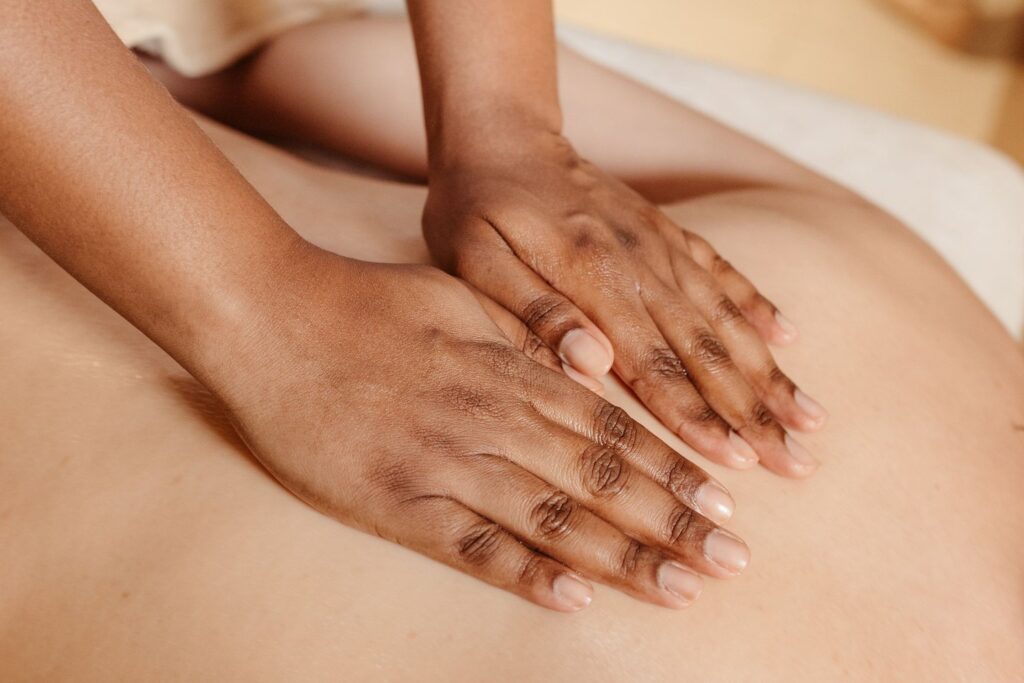
For back pain the evidence is decent. A 2026 umbrella review in Annals of Physical and Rehabilitation Medicine pulled together 21 systematic reviews covering 35,711 people with chronic non-specific low back pain. Manual therapy, which includes massage and soft-tissue work, outperformed comparison treatments for pain and for disability in the short term.
The honest half of that finding is the part about time. Those effects diminish over the following weeks, exactly as they do for nearly every treatment for chronic back pain. So massage is a reasonable tool for getting through a bad patch, and a poor substitute for the things that change your baseline, such as movement and strength work.
Soreness, mood and the toxin myth
A 2023 systematic review on massage in sport and exercise is unusually useful, because it measured the mechanisms people claim rather than only the outcomes.
What it found massage does do: reduce pain and delayed onset muscle soreness, and decrease depression, stress, anxiety and the perception of fatigue, while improving mood, relaxation and how recovered people feel.
What it found massage does not do: change blood lactate clearance, muscle blood flow, muscle temperature or muscle activation. It also did not improve motor abilities, with the exception of flexibility.
That first list is the quiet refutation of the most repeated claim in the industry. Massage does not flush lactic acid out of your muscles, because lactate clearance was measured and did not change. It does not increase blood flow to the muscle either. The ache you get the day after a hard session is not caused by lactic acid sitting in the tissue in any case; that clears within an hour or so of stopping.
None of which makes the soreness benefit fake. It is real and measured. The mechanism is simply not the one on the poster, and is more likely a mix of effects on pain perception and the nervous system.
The Benefit Nobody Advertises
The psychological findings in that review were consistent: lower stress, lower anxiety, better mood, less perceived fatigue. For something sold almost entirely on muscles and knots, the effect on how you feel is arguably the strongest and most reliable thing it offers.
That is worth saying plainly rather than treating it as a consolation prize. An hour of undisturbed, unhurried physical contact in a quiet room is doing something real, and it is a legitimate reason to book one.
It Should Not Actually Hurt
The “no pain, no gain” framing around deep tissue work is not supported by anything, and it causes problems. Pressure should feel firm, intense and tolerable, the sort of thing you can breathe through. If you are gripping the table, holding your breath or tensing against the therapist, the pressure is too high and you are working against the point of the session.
Say so at the time. A good therapist expects the feedback and will adjust immediately. Mild soreness for a day afterwards is common and reasonable. Sharp pain during, bruising, or soreness lasting several days is not a sign it worked.
Who Should Avoid It, or Ask First

- Blood thinners, or a bleeding disorder. Firm pressure causes bruising and deep bleeding is a real risk. Tell the therapist, and check with your doctor first.
- A known or suspected blood clot. Do not have a massage. Pain, swelling, warmth or redness in a calf needs urgent medical assessment, not a therapist.
- Osteoporosis or recent fractures. Deep pressure over bone is not appropriate.
- Active infection, open skin, or a rash in the area.
- Pregnancy, where you want a therapist specifically trained in pregnancy massage rather than a standard deep tissue session.
- Cancer, recent surgery or a new unexplained lump. Not a reason to avoid massage altogether, but a reason to ask your medical team first.
Getting Your Money’s Worth

- Use a registered therapist. In the UK, look for registration with a body such as the CNHC or membership of a recognised professional association.
- Be specific. “My right shoulder since I started a new desk setup” gets you a better session than “a bit of everything”.
- Give feedback during, not in the review afterwards.
- Pair it with movement. Given the benefit fades, the sensible use is a window of reduced pain in which to do the strengthening or mobility work that actually changes things.
- Drink water if you like, but not because it flushes toxins. It does not, and nothing measured says otherwise.
Frequently Asked Questions
Does deep tissue massage release toxins?
No. A 2023 systematic review measured the relevant markers and found massage did not change blood lactate clearance, muscle blood flow, muscle temperature or activation. The toxin story is marketing rather than physiology.
Does it help back pain?
In the short term, yes. An umbrella review of 21 systematic reviews covering 35,711 people found manual therapy improved pain and disability in chronic non-specific low back pain, with the benefit diminishing over time.
Should a deep tissue massage be painful?
No. It should be firm and intense but tolerable, something you can breathe through. If you are bracing or holding your breath, ask for less pressure. Pain is not a sign it is working.
Why am I sore the next day?
Mild soreness for a day is common after firm pressure and is not a problem. Soreness lasting several days, or bruising, means the pressure was too much.
Does massage help muscle soreness after exercise?
Yes, that effect is real and measured. The mechanism is not lactic acid clearance, which does not change, and is more likely to involve pain perception and the nervous system.
Will it improve my athletic performance?
Not directly. The same review found massage does not improve motor abilities apart from flexibility, and concluded that using it purely for performance gains is questionable. Its value to athletes is in staying relaxed and recovering comfortably.
How often should I have one?
There is no established schedule, because the benefit is short-lived rather than cumulative in any proven way. Many people use one during a flare-up, then use that window to get moving again.
Who should not have a deep tissue massage?
Anyone with a suspected blood clot should avoid it and seek medical advice. Check with a doctor first if you take blood thinners, have a bleeding disorder, osteoporosis, recent fractures, active infection, or are pregnant or undergoing cancer treatment.
Related Reading
- Natural Remedies for Joint Pain
- Magnesium for Sleep, and what the evidence says about recovery
- Bone Broth Benefits, another case of a popular mechanism that does not hold up
This article is for educational purposes only and is not medical advice. Massage is not a treatment for any medical condition. Do not have a massage if you have a suspected blood clot, and seek urgent medical advice for pain, swelling, warmth or redness in a calf. Check with your doctor first if you take blood thinners or have a bleeding disorder, osteoporosis, recent fractures, active infection, or are pregnant or undergoing cancer treatment. See our medical disclaimer.
Images by KoolShooters, Jonathan Borba, KoolShooters, Anastasia Ilina-Makarova and KoolShooters via Pexels (free licence).