
Ask which is better for you, Marmite or Bovril, and you will get ten pages telling you one is made from yeast and the other from beef, that one is vegan and the other is not, and that you either love it or you hate it. All true. None of it answers the question.
So we did the thing nobody seems to do with these two: read the back of both jars, and worked out what you actually get in the amount you actually eat.
The answer turned out to be more interesting than we expected, and it hinges on a number neither brand puts on the front.
The short answer
On nutrition alone, Marmite wins, and it is not especially close.
Per 100 grams the two look almost identical. Per the serving each brand declares on its own pack they are not: a mug of Bovril carries 1.4 grams of salt, 23 per cent of an adult’s daily maximum, while Marmite on toast carries 0.86 grams, 14 per cent. Marmite is also fortified with B vitamins, including 76 per cent of your B12 in one serving. Bovril is fortified with nothing.
Bovril wins on exactly one measure, protein, and even that comes with a catch we will get to.
What is actually in each jar
Bovril is beef broth (58 per cent on the current label) made from water, beef bones and salt, plus yeast extract (27 per cent), water, ammonia caramel colour, corn starch, 1 per cent beef powder, flavourings containing celery, two flavour enhancers (disodium inosinate and disodium guanylate) and lactic acid. The yeast carries barley, wheat, oat and rye, so the jar declares all four as allergens along with celery, and it may contain egg, milk, mustard and soya.
Marmite is yeast extract, salt, vegetable juice concentrate and added vitamins. That is close to the whole list.
So straight away: Marmite is vegan and Bovril is not. Neither is gluten free. If you are coeliac, both are out.
Per 100 grams they look like twins
| Per 100 g | Bovril | Marmite |
|---|---|---|
| Energy | 252 kcal | 260 kcal |
| Fat | 0.8 g | under 0.5 g |
| Carbohydrate | 23 g | 30 g |
| Protein | 38 g | 34 g |
| Salt | 11.3 g | 10.8 g |
Read that table and you would conclude the two are interchangeable. Bovril has a little more protein and a little more salt, Marmite a little more carbohydrate. Nothing to choose between them.
That is exactly the trap. Nobody eats 100 grams of either. A 250 gram jar would be two and a half sittings.
Per serving they are not twins at all
Here is the same comparison using the serving each manufacturer prints on its own label.
| Per declared serving | Bovril, 12 g | Marmite, 8 g |
|---|---|---|
| Energy | 30 kcal | 21 kcal |
| Protein | 4.6 g (9% RI) | 2.7 g (5% RI) |
| Salt | 1.4 g (23% RI) | 0.86 g (14% RI) |
| Vitamin B12 | none added | 1.9 µg (76% NRV) |
| Folic acid | none added | 100 µg (50% NRV) |
One serving of Bovril delivers nearly two thirds more salt than one serving of Marmite. The reason is hidden in a line most people never look at: the same 250 gram jar is 21 portions of Bovril and 31 portions of Marmite. Bovril’s serving is half as big again, because Bovril is mostly drunk and Marmite is mostly spread, and a mug takes more than a slice of toast does.
There is a small comedy in the Bovril label too. The portion row on the retailer listing reads “1 portion = GRM”, an unfilled placeholder where the gram figure should be. To find out how big a Bovril serving is, you have to divide 250 by 21 and get 11.9 grams yourself.
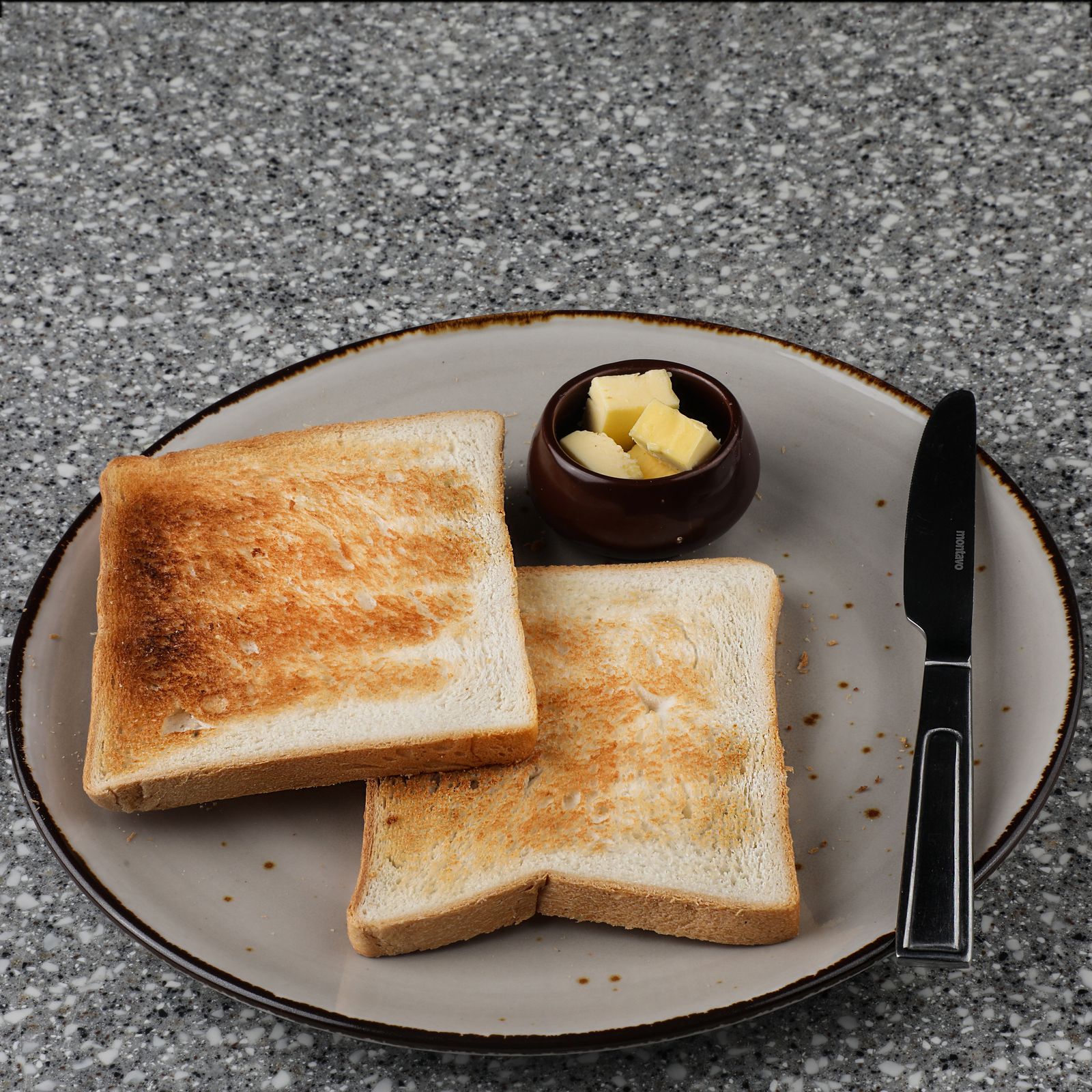
Worth saying plainly: almost nobody measures 8 grams of Marmite, and a heavy hand doubles it. The figures above are the label’s assumption, not a description of your breakfast.
About that protein claim
The front of the Bovril jar says “high in protein”, and the per 100 gram column backs it up at 38 grams. In the serving you drink, that becomes 4.6 grams.

A medium egg gives you about 6 grams, for 0.1 grams of salt. So a mug of Bovril is roughly three quarters of an egg’s protein, bought with a quarter of your daily salt. It is a real protein number. It is just not a useful way to get protein. We went through the same arithmetic in more detail in our piece on whether Bovril is good for you.
Marmite’s 2.7 grams per serving is lower still, and Marmite does not make the claim.
Marmite is fortified. Bovril is not.
This is the part the flavour comparisons miss entirely, and it is the strongest argument either way.
One 8 gram serving of Marmite gives you, as percentages of the daily reference intake: 76 per cent of your vitamin B12, 56 per cent of your thiamin, 50 per cent of your folic acid, 39 per cent of your riboflavin and 34 per cent of your niacin. Those are not trace amounts. That is most of a B complex supplement on a slice of toast.
Bovril’s label declares no added vitamins at all.
For most people eating a mixed diet this is a nice extra rather than a need. For anyone on a vegan or vegetarian diet it is not a nice extra. B12 comes almost entirely from animal foods or fortification, and a 2025 systematic review and meta analysis of vegetarian and vegan Seventh Day Adventists found measurably lower serum B12 in both groups compared with people who eat meat (PubMed 39136672). A fortified spread you already enjoy is one of the easier ways to close that gap.
Why the salt figure is the one that matters
The NHS advises adults to eat no more than 6 grams of salt a day, which is the figure both labels use for their percentages. Most people in the UK are over it before they add anything deliberately, because the salt is already in bread, cheese, bacon and sauces.
The evidence behind that advice is unusually consistent. A 2020 systematic review and meta analysis in the BMJ looked at how the size and the duration of a cut in sodium changed blood pressure, and found a clear dose response: the more sodium came down and the longer it stayed down, the larger the fall in blood pressure (PubMed 32094151). A 2021 dose response meta analysis in Circulation reached the same shape of answer across experimental studies (PubMed 33586450), and a 2025 umbrella review in Annals of Medicine pulled the meta analyses together and linked higher salt intake to worse cardiovascular outcomes (PubMed 41243115).

None of which makes one mug of anything dangerous. It means that if you are having a daily mug of Bovril on top of an ordinary diet, you have spent roughly a quarter of your allowance on a drink with 30 calories in it, and the same habit with Marmite costs you 14 per cent instead.
Who should be more careful
- Anyone watching blood pressure. The salt per serving is the whole story, and Bovril’s is the larger one.
- Anyone prone to gout. Both products are concentrated yeast, and yeast is named among the most purine dense foods in an analysis of 270 foodstuffs published in the Biological and Pharmaceutical Bulletin, which also notes Japanese guidance to keep dietary purines under 400 mg a day (PubMed 24553148). Marmite is yeast extract outright, Bovril is 27 per cent yeast extract.
- Coeliacs. Both declare barley, wheat, oat and rye through the yeast.
- Vegetarians and vegans. Bovril is 58 per cent beef broth. Marmite is the only one of the two on the menu.
- Anyone on a low sodium diet for kidney or heart reasons. Ask whoever is managing it before making either a daily habit.
If you want to keep the habit and lose the salt

Three things actually work.
Switch to reduced salt Marmite. It is the single biggest change available and it costs you nothing. Per serving it carries 0.49 grams of salt, 8 per cent of the daily maximum, against 0.86 grams for the classic jar. It also has slightly more protein at 3.1 grams and slightly more B12 at 2 micrograms, 80 per cent of your daily reference intake. Less salt and more of everything else is a rare trade.
Use less. Obvious, and it works precisely because both products are so concentrated. Half the usual scrape halves the salt and barely changes the taste, since the flavour is intense enough to carry.
Make the drink weaker. If it is the warm savoury mug you are after rather than the spread, use half a teaspoon in the same amount of water. You keep the ritual and halve the number.
The verdict
If the question is which tastes better, that is yours to settle and no label will help.
If the question is which is better for you, the labels answer it clearly. Marmite, and reduced salt Marmite more clearly still. Less salt in the serving you actually eat, a genuinely useful set of B vitamins including most of a day’s B12, and it suits a vegan or vegetarian diet.
Bovril’s case is a warm beefy drink that happens to carry 4.6 grams of protein. It is a good thing to have on a cold evening. It is not a health food, and the jar’s own numbers say so once you stop reading the per 100 gram column.
Frequently asked questions
Which has more salt, Marmite or Bovril?
Per 100 grams they are close, 11.3 grams for Bovril and 10.8 for Marmite. Per the serving each label declares, Bovril has clearly more: 1.4 grams against 0.86 grams, because a Bovril serving is 12 grams and a Marmite serving is 8 grams.
Is Marmite healthier than Bovril?
On the labels, yes. Less salt per serving, and added thiamin, riboflavin, niacin, folic acid and B12, where Bovril adds no vitamins at all. Bovril has more protein per serving, 4.6 grams against 2.7.
Can vegetarians eat Bovril?
No. The current label lists beef broth at 58 per cent and beef powder at 1 per cent. Marmite is yeast extract and suits vegans.
Is either one gluten free?
No. Both carry barley, wheat, oat and rye through the yeast, and both declare them.
Can you drink Marmite like Bovril?
Yes, a spoonful in hot water makes a savoury drink in the same way. Bear in mind you are then using a drink sized spoonful rather than a spread sized one, so the salt goes up with it.
How much is too much?
There is no special limit for either product. The limit is the 6 grams of salt a day that applies to everything you eat, and one serving of Bovril uses 23 per cent of it while one of Marmite uses 14 per cent.
Medical disclaimer
This article is general information about two food products and the figures on their labels. It is not medical advice, and nobody with a medical qualification has reviewed it. If you have high blood pressure, kidney disease, gout or any condition that affects how much salt you should eat, follow the advice of the clinician looking after you rather than anything written here. Labels and recipes change, so check the jar in front of you.
Label figures read on 29 October 2026 from Unilever’s published Marmite nutrition table and the ASDA listing for Bovril Beef and Yeast Extract 250 g.