
Why is alcohol a bad idea on Mounjaro? Because it stacks on top of the side effects the drug already causes, it removes your liver’s ability to correct a low blood sugar, and it makes the warning signs of something serious harder to read. Nobody is going to tell you one glass will hurt you. The point is that the risks line up in the same direction, and most people are not told about them.
Mounjaro is the brand name for tirzepatide, a weekly injection that acts on two gut hormone receptors, GIP and GLP-1. It is prescribed for type 2 diabetes and, as Zepbound in some countries, for weight management. It works well. In the SURMOUNT-1 trial, people on the 15 mg dose lost 20.9% of their body weight over 72 weeks.
That is exactly why the alcohol question matters. You are on a powerful drug, usually for a reason that will not go away, and alcohol interferes with it in four specific ways.
The Short Version
| Low blood sugar | Alcohol stops your liver releasing glucose, and the symptoms look like being drunk |
| Stomach side effects | Already affect 30% to 50% of people on these drugs. Alcohol irritates the same system |
| Dehydration | Vomiting and diarrhoea plus a diuretic is a bad combination |
| Masked warning signs | Severe abdominal pain gets blamed on the injection instead of investigated |
| Worst timing | Dose escalation weeks, and drinking on an empty stomach |
| Talk to your prescriber if | You also take insulin or a sulfonylurea, or you drink regularly |
1. Alcohol Takes Away Your Defence Against Low Blood Sugar
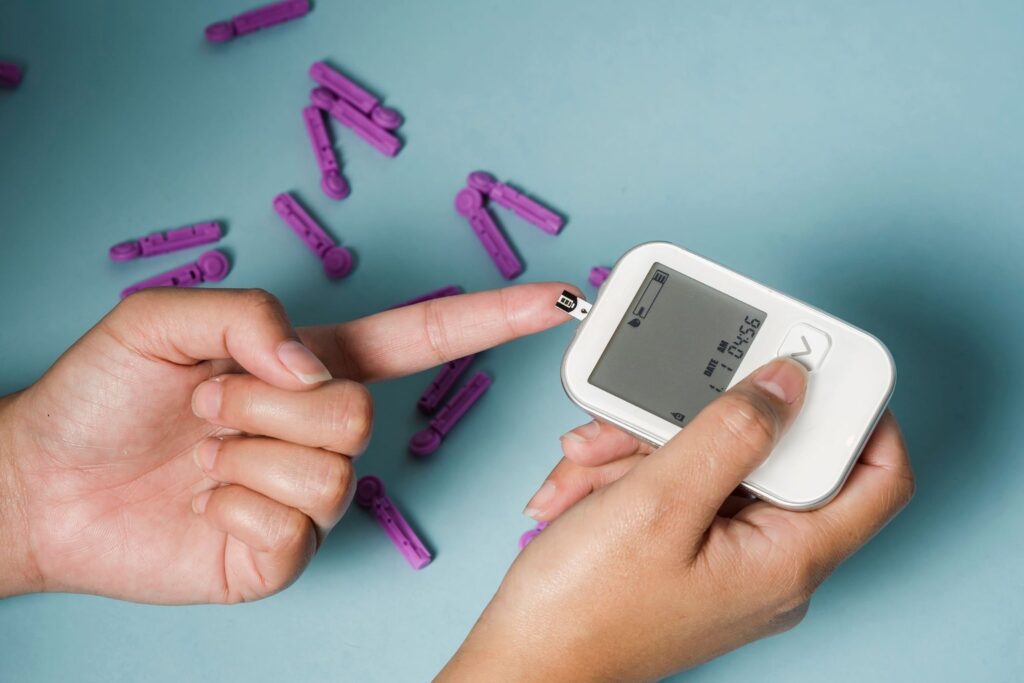
This is the one that deserves the most attention, and it is the least understood.
When your blood sugar starts to drop, your liver releases stored glucose to catch it. Alcohol blocks that process. While your liver is busy clearing alcohol it stops producing glucose, a mechanism demonstrated in laboratory work on how ethanol suppresses hepatic glucose production. So your safety net is gone at exactly the moment you might need it, and clinical reviews of alcohol and hypoglycaemia in diabetes treat this as a recognised hazard rather than a theoretical one.
Tirzepatide on its own carries a low risk of hypoglycaemia. Combined with insulin or a sulfonylurea such as gliclazide, the risk is real, and alcohol makes it considerably worse.
Two details make this more dangerous than it sounds:
- It is delayed. The drop often comes several hours after your last drink, which for most people means during the night, asleep, when nobody notices.
- The symptoms are identical to being drunk. Slurred speech, confusion, unsteadiness, sweating, drowsiness. Other people, and you, will assume it is the alcohol. That is how a treatable low becomes an emergency.
If you take insulin or a sulfonylurea alongside Mounjaro, this single point is the reason to have a proper conversation with your prescriber rather than reading an article.
2. You Are Adding Irritation to an Already Irritated Gut
Stomach side effects are not a rare complication of tirzepatide, they are the normal experience. A pooled analysis of the tirzepatide trials found gastrointestinal adverse events in 27.8% to 72.8% of people taking it, against 12.2% to 32.5% on placebo. Between 1% and 10.5% stopped treatment altogether because of them.
A 2026 expert review of GI effects across this whole drug class puts nausea, vomiting, diarrhoea and constipation at roughly 30% to 50% of patients, concentrated during initiation and dose increases, and driven partly by delayed gastric emptying.
Alcohol independently irritates the stomach lining, increases acid production and relaxes the valve at the top of the stomach. You are pouring it onto a system the drug has already slowed down and made sensitive. The practical result people report is that a quantity they used to handle comfortably now produces hours of nausea or reflux.
There is a second-order problem here. Those side effects are the main reason people abandon treatment. If drinking makes your weeks miserable, the thing most likely to break is the treatment, not the drinking.
3. Alcohol Hits Differently, and Not in a Good Way
Tirzepatide slows how quickly your stomach empties. That changes the pattern of how alcohol reaches your bloodstream, and it makes the effect less predictable than you are used to. Add the fact that most people on it are eating substantially less, and often weigh less than they did, and the same drink can land harder.
Many people also find they simply want alcohol less. That is not imagination. A 2026 randomised trial in the Lancet found semaglutide, a related drug, significantly reduced heavy drinking days in people with alcohol use disorder and obesity. Research on tirzepatide specifically is earlier stage, but the class effect on alcohol craving is now well documented.
That sounds like good news, and mostly it is. The catch is that a reduced appetite for alcohol combined with unpredictable absorption means your internal sense of “this is my normal amount” is no longer reliable. People get caught out this way.
4. Dehydration, Which Is the One That Lands People in Hospital
Vomiting and diarrhoea lose you fluid. Alcohol is a diuretic, so it loses you more. Reduced appetite means you are probably drinking less water than you used to as well. Three things pulling the same direction.
Serious dehydration can affect kidney function, and this matters more if you take blood pressure medication, a diuretic or an ACE inhibitor, all common in the same group of patients. It is the least dramatic item on this list and probably the most likely to actually cause you a problem.
The Risk Nobody Mentions: Masking
Worth being precise here, because there is a lot of scare content about these drugs and pancreatitis. The evidence does not support it. A large propensity-matched cohort study found GLP-1 drugs were not associated with increased acute pancreatitis, and the 2026 class review concluded the same, describing the safety signals as most plausibly explained by diagnostic misclassification.
So the drug is not the pancreatitis risk. Alcohol is. Heavy drinking is one of the two leading causes of acute pancreatitis worldwide, entirely independently of what you are injecting.
That creates a genuine hazard that has nothing to do with drug interaction. If you develop severe upper abdominal pain, and you are someone who has spent months being told nausea and stomach pain are a normal part of the treatment, you will very reasonably assume it is the injection again. So will the people around you. That delay is the danger.
The same logic applies to gallstones, which the class review describes as a probable association driven by rapid weight loss rather than the drug itself. Gallstone pain also gets filed under “the usual”.
When It Matters Most
- The week after a dose increase. Both analyses put the side effects squarely in the escalation phase. This is the worst possible week to test your tolerance.
- On an empty stomach. Standard advice for anyone, and more important here because you are eating less anyway and because of the hypoglycaemia risk.
- If you take insulin or a sulfonylurea. The combination is where the serious hypoglycaemia sits.
- If you have fatty liver disease. Common in this patient group, and alcohol is directly harmful to a liver already under strain.
- Before a procedure with sedation. The class review notes increased residual stomach volume on these drugs. Always tell your anaesthetist you are taking it.
- If you are drinking to manage how the treatment makes you feel. That is a reason to talk to your prescriber, not to push through.
If You Are Going to Drink Anyway
Most people will have a drink at some point, and pretending otherwise helps nobody. This is harm reduction, not permission, and none of it replaces your prescriber’s advice.
- Eat first, with carbohydrate in the meal. This is the single most protective thing you can do against a delayed low.
- Assume less than your old normal. Treat your previous tolerance as out of date, because it probably is.
- Alternate with water. Directly addresses the dehydration stack.
- Check your blood sugar before bed if you monitor it, and again if you wake up feeling wrong.
- Tell someone you are with that low blood sugar can look like being drunk, so they know to question the obvious explanation.
- Skip the escalation weeks entirely. Give yourself the fortnight after a dose increase.
- Avoid sugary mixers and cocktails, which swing blood sugar up and then down and add substantial calories to a treatment you are paying for to reduce them.
Get Medical Help If

- Severe abdominal pain, especially pain boring through to your back, with or without vomiting. Do not assume it is the injection. This needs urgent assessment.
- Vomiting you cannot stop, or signs of dehydration such as very dark urine, dizziness on standing or passing little urine.
- Confusion, sweating, shaking or drowsiness that could be low blood sugar. Treat with fast-acting sugar and seek help if it does not resolve.
- Yellowing of the skin or eyes, or pale stools, which point to the liver or gallbladder.
Frequently Asked Questions
Can you drink alcohol on Mounjaro?
There is no absolute prohibition, and alcohol does not stop tirzepatide working. But it worsens the drug’s most common side effects, removes your protection against low blood sugar, and adds to dehydration. Your prescriber’s view on your own situation matters more than a general answer.
Why does alcohol make Mounjaro side effects worse?
Because they target the same system. Tirzepatide slows the stomach and causes nausea in roughly 30% to 50% of people, while alcohol irritates the stomach lining and increases acid. The two effects add together rather than cancelling out.
Can Mounjaro and alcohol cause low blood sugar?
Yes, particularly alongside insulin or a sulfonylurea. Alcohol stops the liver releasing stored glucose, so it removes the body’s normal correction. The drop is often delayed by several hours, which frequently means overnight.
How long after my Mounjaro injection should I wait to drink?
There is no official waiting period, because tirzepatide stays active all week. What matters more is avoiding alcohol during the days after a dose increase, when side effects peak, and never drinking on an empty stomach.
Does Mounjaro reduce how much you want to drink?
Many people report exactly that, and it fits the evidence. A 2026 Lancet trial found semaglutide significantly reduced heavy drinking days in people with alcohol use disorder. The effect appears to be shared across this class of drugs.
Does Mounjaro cause pancreatitis, and does alcohol make it worse?
The evidence does not show these drugs increase pancreatitis risk; a large matched cohort study found no association. Heavy alcohol use is a leading cause in its own right. The real risk is that you dismiss severe abdominal pain as a normal drug side effect and delay getting seen.
Will drinking stop me losing weight on Mounjaro?
Alcohol adds calories that do not make you feel full, so it works against the thing you are taking the drug for. It is not a reason the drug will fail, but on a treatment this expensive it is worth counting honestly.
What if I drink most days?
Tell your prescriber plainly. Regular drinking changes the calculation on hypoglycaemia risk, liver health and which medicines are appropriate alongside Mounjaro. Doctors are not there to judge you, and an incomplete picture is what leads to bad prescribing.
People often come off a GLP-1 drug and look for something to hold the weight. If that is where you are, Optislim vs Optifast compares the two meal replacement programmes properly, including which one expects a doctor to be involved.
Related Reading
- Natural Ozempic Alternatives, and why the pooled numbers are nowhere near the drugs
- Berberine Benefits, the supplement sold as a substitute for these medicines
- Lowering Blood Sugar Naturally
- Prebiotics and Probiotics for Gut Health
This article is for educational purposes only and is not medical advice. It is not a recommendation to start, stop or change any medication, and it is not permission to drink. Never alter a prescribed treatment without speaking to your prescriber. If you take insulin or a sulfonylurea alongside Mounjaro, or you drink regularly, discuss alcohol with your diabetes team specifically. If you are worried about your drinking, your GP can help without judgement. See our medical disclaimer.
Images by Monstera Production, Klaus Nielsen, cottonbro studio, Fernando B M, RDNE Stock project and cottonbro studio via Pexels (free licence).