
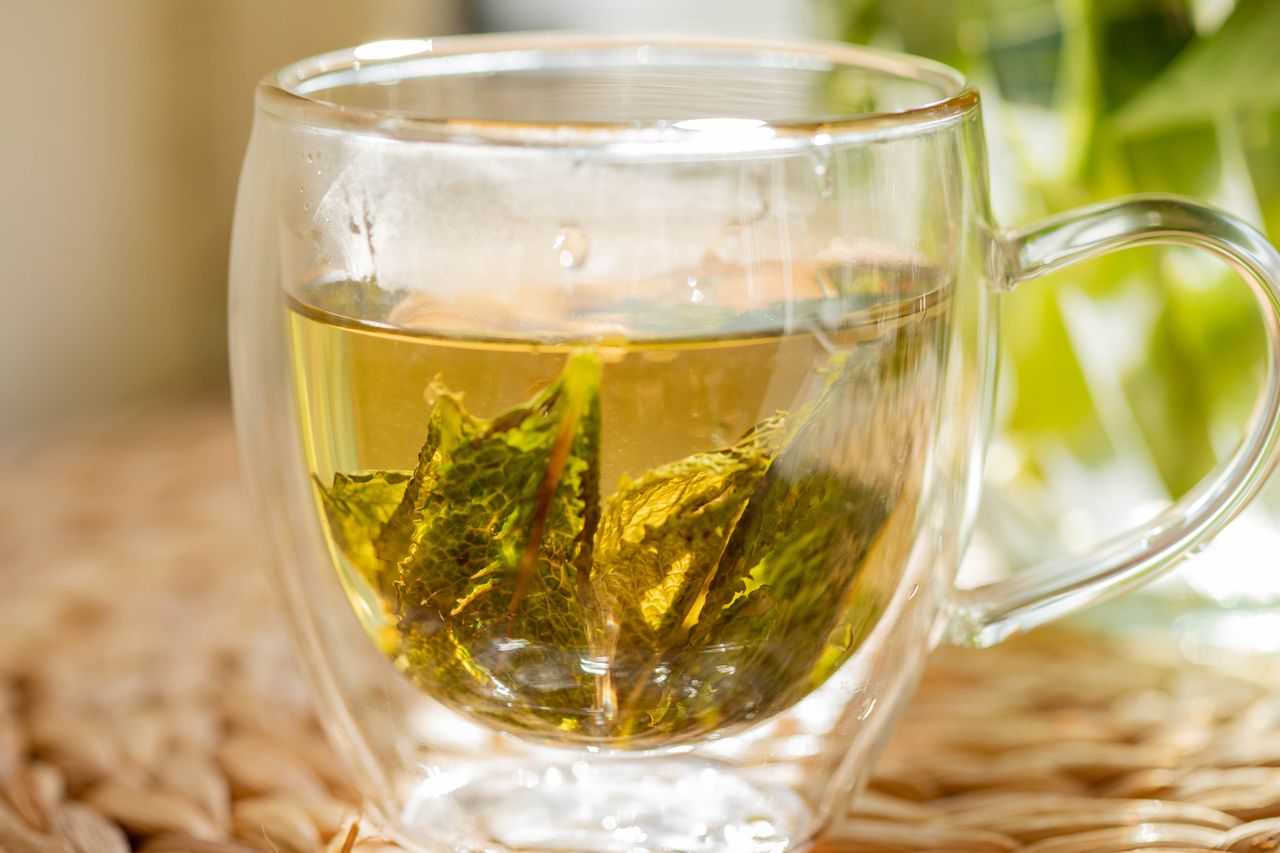
Lemon balm (Melissa officinalis) is the gentle, lemon-scented member of the mint family that medieval herbalists steeped for “melancholy” and that modern researchers keep testing for stress, anxiety and sleep. The tea is mild, pleasant and easy to grow on a windowsill, and unlike a lot of “calming” herbs it has a respectable stack of human trials behind it. This guide covers the real lemon balm tea benefits, what the studies actually found, how to make it properly (there’s one step most people skip), and who should be careful with it.
Lemon Balm Tea at a Glance
| What it is | An infusion of fresh or dried lemon balm leaves; caffeine-free, tastes lightly lemony and green |
| Best for | Stress and mild anxiety, winding down before bed, nervous stomach, restless children (with valerian) |
| Evidence | Moderate for mood and stress (several placebo-controlled trials); promising for sleep and cognition; early for digestion and cold sores |
| Basic recipe | 1 tablespoon fresh leaves (or 1–2 teaspoons dried) per cup, cover and steep 5–10 minutes |
| Time | 10 minutes |
| Caution | Thyroid conditions, sedative medicines, pregnancy (ask first), driving after large amounts |
What Is Lemon Balm?
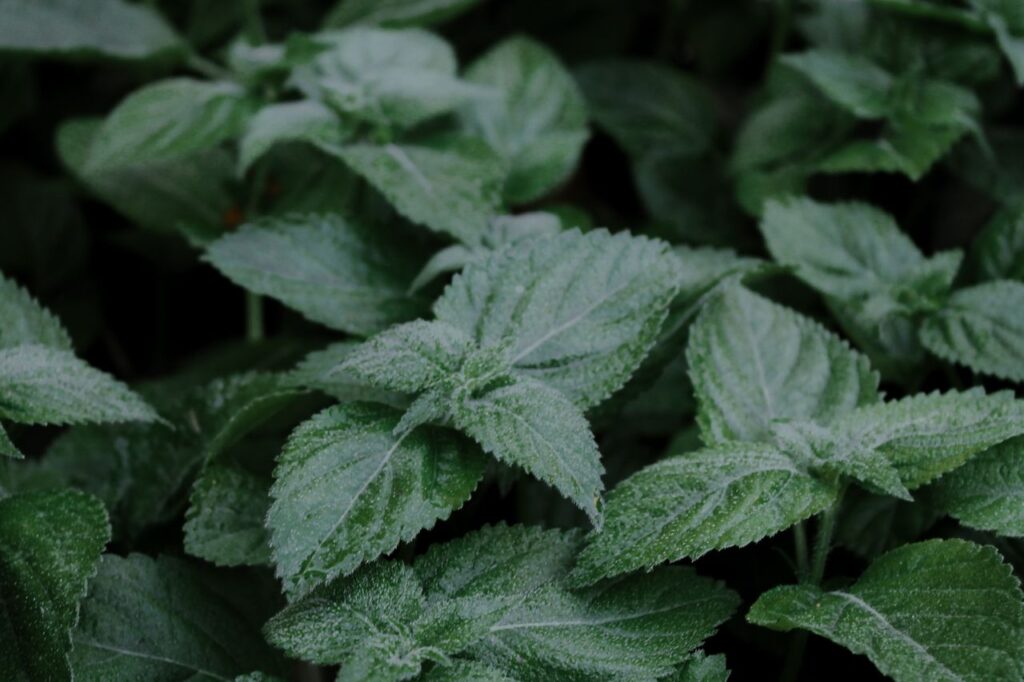
Lemon balm is a hardy perennial native to the Mediterranean and now naturalised across Europe and North America, where it spreads with mint-like enthusiasm. The Latin name Melissa means “honeybee”, because bees love the flowers. The leaves contain rosmarinic acid and a fragrant essential oil rich in citral and citronellal, and it’s these compounds, rather than anything mystical, that are thought to explain its calming reputation. Rosmarinic acid inhibits an enzyme (GABA transaminase) that breaks down GABA, the brain’s main calming neurotransmitter, which is a plausible mechanism for the mild anti-anxiety effect seen in trials.
Lemon Balm Tea Benefits: What the Research Shows
One honest caveat before the list: nearly all of the trials used standardised capsules or extracts (typically 300–600 mg), not tea. A cup of lemon balm tea delivers a smaller and more variable dose, so think of the studies as showing what the plant can do, with tea as the gentle everyday version.
1. It takes the edge off stress
In a placebo-controlled crossover trial at Northumbria University, healthy volunteers were put through a deliberately stressful multitasking test after taking lemon balm or placebo. A 600 mg dose reduced the negative mood effects of the stress and increased self-rated calmness, while a lower 300 mg dose actually sped up performance on the maths component without hurting accuracy. Calmer but not dulled is exactly what people say they want from a herbal tea.
2. It helps mild anxiety, and the pooled evidence agrees
A 2011 pilot study gave 20 people with mild-to-moderate anxiety and sleep trouble a standardised lemon balm extract for 15 days; anxiety symptoms fell by around 15–18% and insomnia by 42%, though it had no placebo group. More convincingly, a 2021 systematic review and meta-analysis in Phytotherapy Research pooled the available randomised trials and found lemon balm significantly improved both anxiety and depression scores compared with placebo, mainly when taken over a short period. The authors called for larger, longer trials, which is the standard (and fair) verdict on most herbs.
3. It may improve sleep, especially paired with valerian
The sleep evidence is mostly for lemon balm combined with valerian. In an observational study of 918 children under 12 with restlessness and sleep problems, a valerian–lemon balm preparation improved sleep in 81% and restlessness in 70% over four weeks, with very few side effects, though again there was no placebo. For adults, the anxiety trials above also reported better sleep as a secondary effect. A cup an hour before bed is low-risk and, for many people, noticeably relaxing.
4. It has a surprising track record for memory and agitation
In a four-month double-blind trial in Iran, patients with mild-to-moderate Alzheimer’s disease who took a lemon balm extract scored better on cognitive tests and were less agitated than the placebo group. That’s a specific medical context and doesn’t mean tea sharpens a healthy memory, but it fits with the volunteer studies showing lemon balm can improve alertness and focus at the right dose.
5. It may ease PMS and a nervous stomach
A placebo-controlled trial in 100 students found that lemon balm capsules taken for three cycles reduced the intensity of premenstrual symptoms. Traditionally lemon balm is also a carminative, a herb for bloating and the kind of stomach knot that comes with anxiety; the trial evidence here is thin, but as a mint-family herb it shares peppermint’s gentle antispasmodic action, and it’s a sensible after-dinner cup.
6. Cold sores (but that’s the cream, not the tea)
Lemon balm’s antiviral reputation comes from a 1999 trial of a lemon balm cream that reduced symptoms of recurrent cold sores by day two. Drinking the tea won’t do the same job; if that’s your goal, look for a topical lemon balm balm or press a cooled, strong tea bag against the sore.
How to Make Lemon Balm Tea
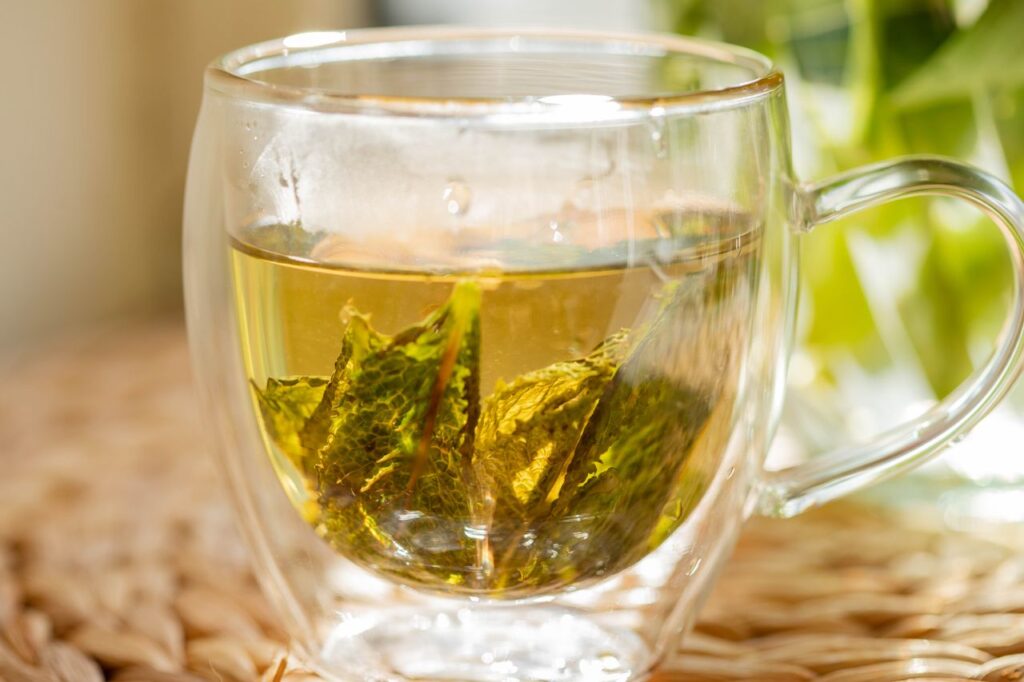
Makes 1 cup · 10 minutes · about 2 kcal without honey
Ingredients
- 1 tablespoon fresh lemon balm leaves, lightly torn (about 8–10 leaves), or 1–2 teaspoons dried
- 1 cup (240 ml) water
- Optional: 1 teaspoon honey, a slice of lemon, a few mint leaves or a chamomile tea bag
Method
- Bruise the leaves. Tear or crush fresh leaves between your fingers to release the oils; you’ll smell the lemon immediately.
- Use water just off the boil. Boil, then wait about 30 seconds. Rolling-boil water scalds delicate leaves and drives off the aroma.
- Cover while it steeps. This is the step most people skip. Lemon balm’s active compounds are volatile oils that escape with the steam; a saucer over the mug keeps them in the cup. Steep 5 minutes for fresh leaves, 10 for dried.
- Strain and finish. Add honey or lemon if you like. For a sleep cup, skip the lemon (it brightens rather than soothes) and add chamomile instead.
Fresh vs. Dried, and Growing Your Own
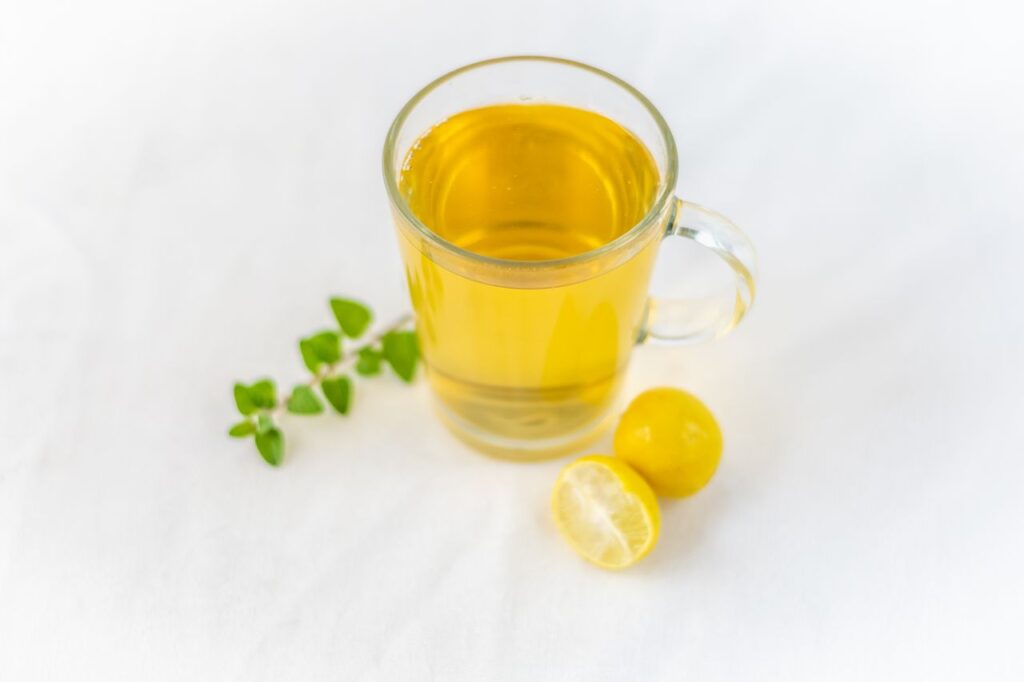
Fresh lemon balm makes the best tea by a wide margin: bright, lemony and green. Dried leaves lose much of the essential oil and taste more like a generic herbal tea, so if you buy dried, buy small amounts, keep them in a sealed jar away from light, and use them within six months. The easiest fix is to grow it: a single plant in a pot on a sunny windowsill or balcony will give you leaves from spring to autumn, and it comes back every year. Pick leaves before the plant flowers for the strongest scent, and harvest in the morning. To dry your own, hang small bunches in a warm, airy, shaded spot for a week, then strip the leaves and store them whole.
When to Drink It (and How Much)
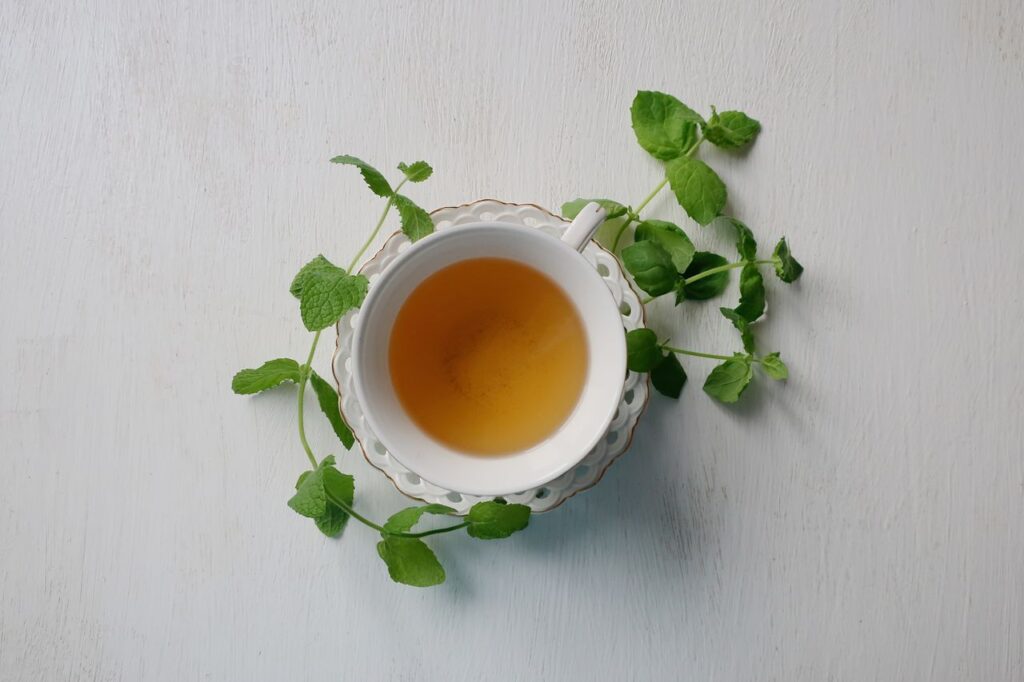
- For stress and anxiety: 1–3 cups a day, spread out. Effects in the trials appeared within an hour of a dose and built over a couple of weeks of regular use.
- For sleep: one strong cup (steeped the full 10 minutes) 30–60 minutes before bed, ideally with chamomile or as part of a fixed wind-down routine.
- For digestion: a cup after meals.
- Children: a weak cup is traditionally given to restless children over about two years old; ask your paediatrician first, and never use it in place of medical advice for a child who isn’t sleeping.
Lemon balm pairs beautifully with other calming herbs. Try it with chamomile for sleep, with peppermint for a stomach that’s tied in knots, or with a slice of fresh ginger for nausea. Cold-brewed overnight in the fridge with a squeeze of lemon it makes an excellent caffeine-free iced tea.
Side Effects and Who Should Be Careful
- Drowsiness. At tea strength this is mild, but don’t combine several strong cups with alcohol, sleeping tablets, benzodiazepines or other sedatives, and see how it affects you before driving.
- Thyroid conditions. Laboratory studies from the 1980s found lemon balm extracts block thyroid-stimulating hormone from binding to its receptor in test tubes. There’s no good evidence that a cup of tea affects a healthy thyroid, but if you have an underactive thyroid or take levothyroxine, check with your doctor before drinking it daily.
- Pregnancy and breastfeeding. Lemon balm is a common culinary herb and an occasional cup is widely considered fine, but there’s not enough safety data for regular medicinal use, so ask your midwife or doctor.
- Surgery. Stop a week before an operation, because of the potential additive effect with anaesthetics and sedatives.
- Mild stomach upset, headache or dizziness are occasionally reported with high-dose extracts; they’re rare with tea.
- Anxiety and insomnia that persist deserve proper help. Lemon balm is a gentle support, not a treatment for panic attacks, depression or chronic insomnia.
Frequently Asked Questions
What does lemon balm tea taste like?
Light, green and gently lemony, with a faint mint note and no bitterness. Fresh leaves taste noticeably brighter than dried.
Does lemon balm tea make you sleepy?
It’s relaxing rather than sedating. Most people feel calmer without feeling drowsy, which is why it works as an afternoon cup as well as a bedtime one. Very strong cups, or lemon balm combined with valerian, are more likely to make you sleepy.
Can I drink lemon balm tea every day?
Yes, for most healthy adults 1–3 cups a day is fine. The trials ran for two weeks to four months without significant side effects. If you have a thyroid condition or take sedatives, check with your doctor first.
Is lemon balm the same as lemongrass or lemon verbena?
No. All three smell of lemon but they’re unrelated plants. Lemon balm is a mint-family herb with soft crinkled leaves; lemongrass is a tropical grass used in cooking; lemon verbena is a shrub with long pointed leaves. Only lemon balm has the anxiety and sleep research described here.
How long does it take to work?
In the volunteer studies, mood effects showed up within one to three hours of a single dose. For ongoing anxiety or sleep problems, give it two to four weeks of daily use before judging.
Is lemon balm tea safe for kids?
A weak cup is traditionally used for restless children, and the large observational study above found a valerian–lemon balm preparation well tolerated in under-12s. Still, ask a paediatrician before giving any herbal remedy regularly to a child.
Lemon balm or chamomile for sleep?
Chamomile has slightly more direct sleep evidence; lemon balm has better evidence for the anxiety that keeps you awake. They work well together, so the easiest answer is both in one cup.
More Calming Herbal Remedies
- Chamomile Tea Benefits — the classic bedtime cup, with the research
- Peppermint Tea Benefits — lemon balm’s cousin for bloating and headaches
- Natural Remedies for Insomnia — the full guide to sleeping better
- Honey Lemon Tea — for when the stress comes with a sore throat
- How to Make Ginger Tea — for nausea and a nervous stomach
- Browse all herbal remedies
This article is for educational purposes only and is not medical advice. Consult a qualified healthcare provider before using lemon balm regularly if you have a thyroid condition, take sedative or thyroid medication, are pregnant or breastfeeding, or have persistent anxiety or insomnia. See our medical disclaimer.
Images by Youssef Samuil, Valeria Boltneva, Visions of Asia and Asya Vlasova via Pexels (free licence).