
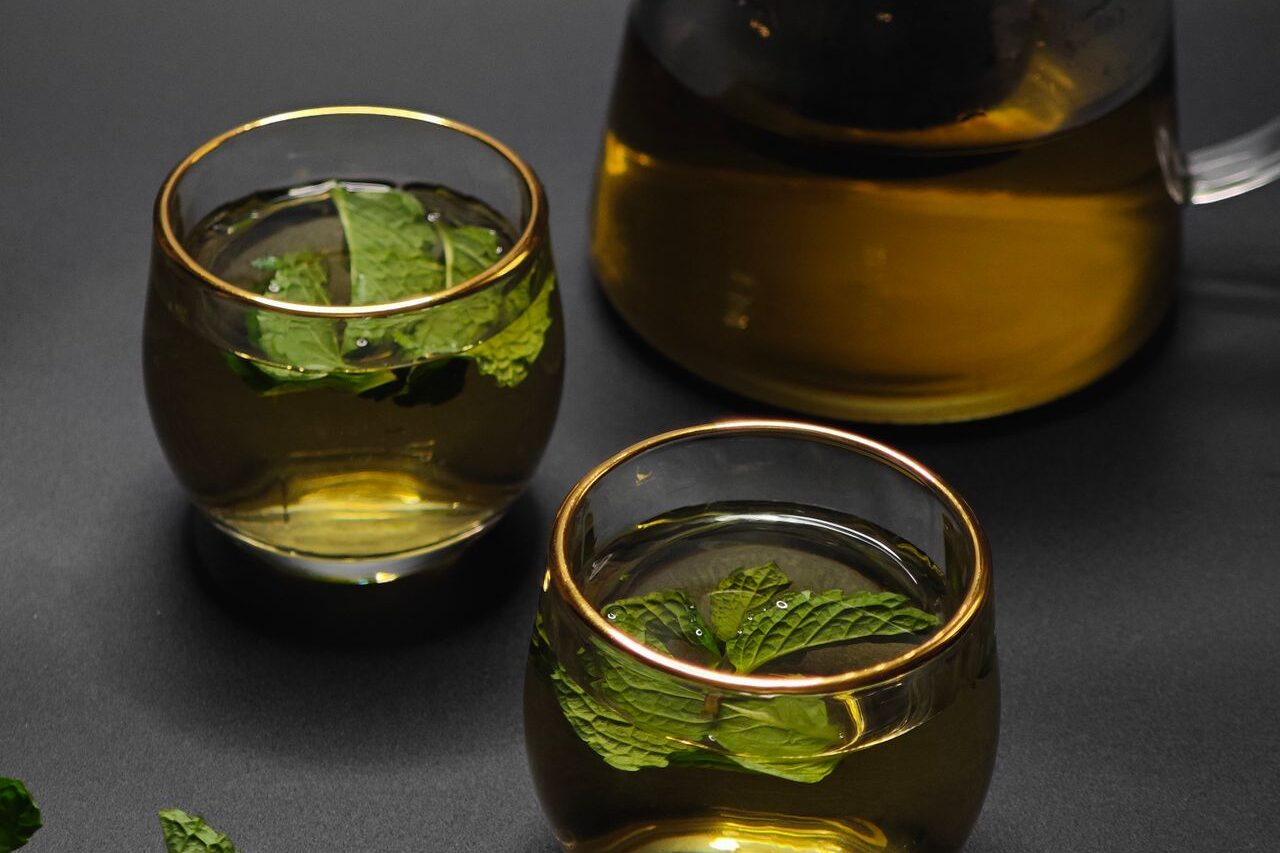
Peppermint tea is the after-dinner drink that earns its place. It’s caffeine-free, costs pennies, and unlike a lot of herbal teas it’s built on an ingredient with serious clinical evidence behind it: peppermint oil is one of the best-studied natural treatments for irritable bowel syndrome, and the menthol in a fresh cup does real, measurable things to your gut, your sinuses and your head. This guide covers the peppermint tea benefits that hold up, the ones that don’t, how to brew a cup that’s strong enough to work, and who should skip it (yes, reflux sufferers, that means you).
Peppermint Tea at a Glance
| Plant | Peppermint (Mentha × piperita), a natural cross of watermint and spearmint |
| Active compounds | Menthol, menthone, rosmarinic acid, flavonoids |
| Caffeine | None |
| Best-proven benefits | Bloating, gas and IBS-type cramps; nasal congestion; alertness |
| Brew | 1 tablespoon dried leaf (or 2 bags, or a handful of fresh), covered, 7–10 minutes |
| Avoid if | You have acid reflux/GERD or a hiatal hernia; for children under 5, avoid strong tea |
What Is Peppermint?
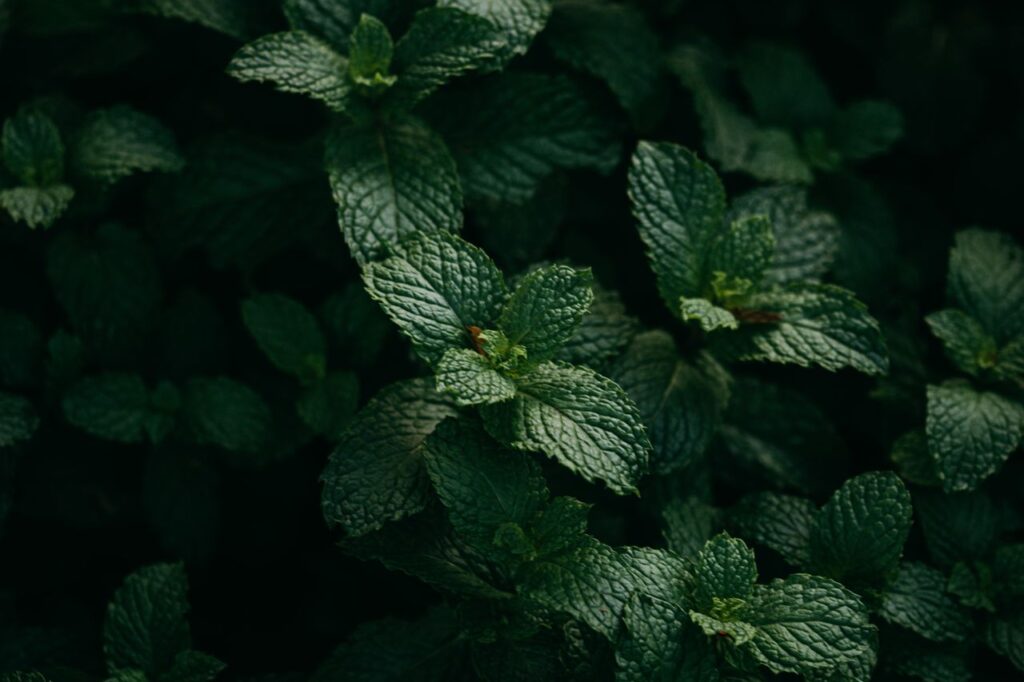
Peppermint is a hybrid of watermint and spearmint that first turned up in English gardens in the 1700s and has been grown for its oil ever since. What sets it apart from spearmint and other garden mints is menthol: peppermint leaves contain up to 40 percent menthol in their essential oil, versus almost none in spearmint (which gets its flavour from carvone). Menthol is a cooling compound that binds to the same cold-sensing receptor in your nerves (TRPM8) that ice does, which is why peppermint feels cold without being cold, and it also relaxes smooth muscle, which is where most of its digestive benefits come from. A review in Phytotherapy Research summarises the tea’s antioxidant, antimicrobial and antispasmodic activity.
Peppermint Tea Benefits: What the Evidence Supports
1. Bloating, gas and stomach cramps (strong evidence for the oil, good for the tea)
This is peppermint’s headline act. Menthol relaxes the smooth muscle of the gut wall, which eases the spasms that cause cramping and lets trapped gas move along. A 2019 meta-analysis of 12 randomised trials found peppermint oil capsules significantly reduced abdominal pain and overall symptoms in people with irritable bowel syndrome, and enteric-coated peppermint oil is now recommended in several IBS guidelines. Tea delivers far less menthol than a capsule, so it won’t replace treatment for diagnosed IBS, but for everyday bloating after a big meal, a strong cup of peppermint tea is one of the quickest, cheapest fixes there is. Drink it 20–30 minutes after eating for the best effect.
2. Indigestion and nausea (moderate evidence)
Peppermint’s antispasmodic effect also helps the heavy, over-full feeling of functional dyspepsia. A 2023 Cochrane review found that a peppermint-and-caraway oil combination improved dyspepsia symptoms compared with placebo. For nausea, peppermint is soothing and its aroma alone helps some people, though ginger has the stronger evidence; a cup made with both is a favourite in our kitchen.
3. Blocked nose and sinus pressure (moderate evidence, immediate effect)
Menthol doesn’t actually shrink swollen nasal tissue, but it triggers the cold receptors in your nose so strongly that your brain registers more airflow, which is why a steaming mug of peppermint tea makes a stuffy head feel clearer within a minute or two. Breathe the steam as you sip. Combined with warmth and hydration, it’s one of the most pleasant ways to get through a head cold, and it appears on our list of home remedies for sore throat for the same reason.
4. Tension headaches (good evidence for the oil on the skin)
In a German randomised trial, peppermint oil rubbed on the forehead and temples relieved tension-type headache as effectively as 1,000 mg of paracetamol. That’s the oil, not the tea, but the two work well together: sip a strong cup, and dab a drop of diluted peppermint oil (a few drops in a teaspoon of carrier oil) on your temples. Keep it away from the eyes.
5. Alertness and focus (small studies)
Peppermint is the one “relaxing” herbal tea that’s actually mildly stimulating. A study in the International Journal of Neuroscience found the aroma of peppermint improved memory and alertness compared with no scent, and other small studies show similar effects on attention and fatigue. It won’t replace coffee, but a mid-afternoon cup is a good caffeine-free alternative when you need to keep going.
6. Fresh breath and oral health (traditional, plausible)
Peppermint is in toothpaste for a reason. Menthol and the tea’s other volatile oils are antibacterial in the lab, and a cooled cup makes a decent mouth rinse after meals. It masks bad breath immediately and may reduce the bacteria that cause it, though it’s no substitute for flossing.
7. Menstrual cramps (early evidence)
Because menthol relaxes smooth muscle, peppermint has been tested for period pain, with a couple of small trials finding it reduced cramp intensity. The evidence is thinner than for ginger, but a warm cup is harmless and comforting, and it doubles as relief for the bloating that comes with it.
What peppermint tea probably won’t do
Claims that peppermint tea “burns fat,” cures allergies or fixes hormonal imbalances aren’t supported. The most you can say for weight is that it’s a satisfying zero-calorie drink that can stand in for dessert. The NIH’s peppermint summary is a good reality check.
How to Make Peppermint Tea
With fresh leaves (best flavour)
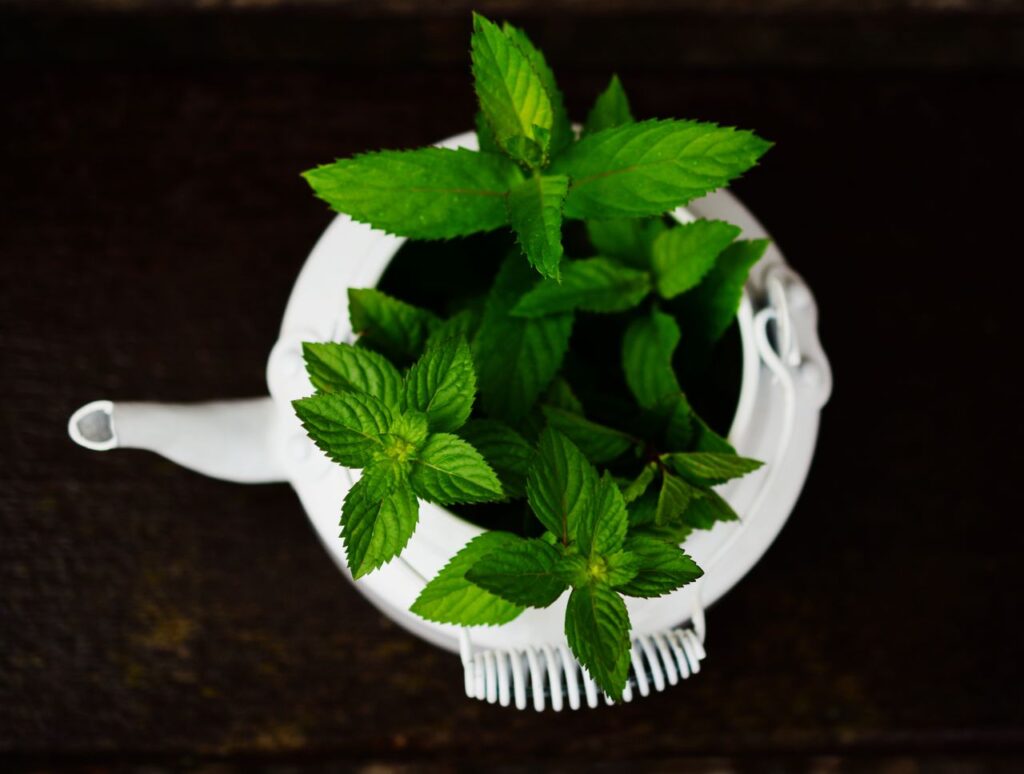
- Pick or buy a generous handful of peppermint (10–15 leaves per cup). Rinse and pat dry.
- Crush or tear the leaves, or bruise them with the back of a spoon. This ruptures the oil glands and releases far more menthol than whole leaves.
- Put the leaves in a mug or teapot and pour over just-boiled water.
- Cover and steep for 7–10 minutes. Covering traps the volatile oils that otherwise disappear with the steam.
- Strain (or leave the leaves in), and add honey or lemon if you like.
With dried leaf or tea bags
Use 1 tablespoon of dried peppermint per cup (or 2 tea bags for a properly strong cup), just-boiled water, and a covered 7-minute steep. Buy whole dried leaf from a herb supplier rather than dusty bags if you can; it keeps its oils far longer. Store it in an airtight jar away from light and use within a year.
Variations
- Moroccan mint tea: steep 1 teaspoon of gunpowder green tea with a big handful of fresh mint and sugar to taste. Contains caffeine.
- Peppermint ginger: add 3–4 slices of fresh ginger. The best combination for a queasy, bloated stomach.
- Peppermint chamomile: equal parts; the classic after-dinner, pre-bed blend. See our chamomile tea guide.
- Cold-season cup: peppermint with a slice of lemon and a spoonful of elderberry syrup or honey.
- Iced peppermint tea: cold-brew a big handful of fresh mint in a litre of water in the fridge for 6–8 hours, strain, and serve over ice with lime. Zero calories and genuinely refreshing.
- Peppermint hot chocolate: steep a strong ½ cup of tea, then top up with hot milk and a tablespoon of cocoa. Kids love it.
How Much Peppermint Tea Can You Drink?
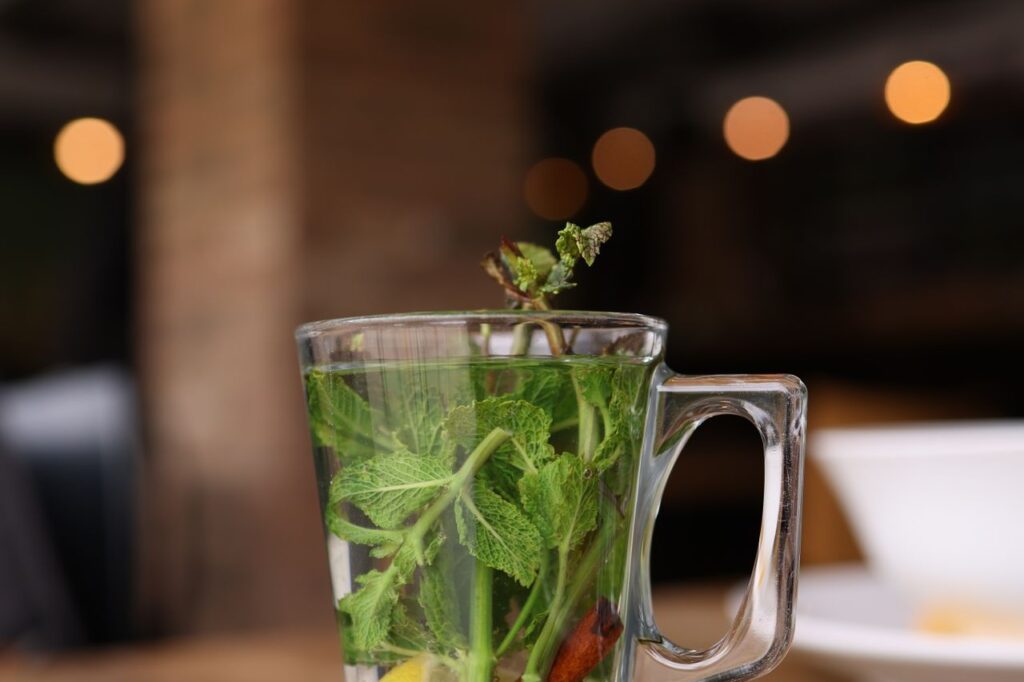
- For bloating and digestion: one strong cup 20–30 minutes after meals, up to three times a day.
- For congestion: a steaming cup every few hours while you’re stuffed up; breathe the steam.
- For focus: one cup mid-afternoon in place of a third coffee.
- Upper limit: there’s no established maximum for the tea, and 2–4 cups a day is common and safe for healthy adults. Peppermint oil is a different matter: never take undiluted oil by mouth, and stick to the dose on enteric-coated capsules.
- Children: weak peppermint tea is fine for children over 5. Avoid it in younger children and never apply menthol or peppermint oil near a baby’s or toddler’s face, where it can cause breathing problems.
Side Effects and Who Should Avoid It
- Acid reflux and GERD: the same muscle-relaxing effect that eases gut cramps also relaxes the valve between your stomach and oesophagus, so peppermint can make heartburn worse. If you get reflux, choose chamomile or ginger instead.
- Hiatal hernia: same reason; avoid.
- Gallstones: peppermint stimulates bile flow and can trigger pain. Check with your doctor.
- Medications: peppermint may affect how the liver processes some drugs (including cyclosporine and some blood-pressure and diabetes medicines). Mention it to your pharmacist if you drink it daily.
- Pregnancy and breastfeeding: the tea in normal amounts is generally considered safe; very large amounts of peppermint (and especially the oil) are traditionally thought to reduce milk supply, so nursing mothers may want to keep it to a cup a day.
- Allergy: rare, but mint allergy exists. Stop if you notice itching, rash or wheezing.
Frequently Asked Questions
Is peppermint tea good for bloating?
Yes; it’s one of the best herbal teas for it. Menthol relaxes the gut muscle, easing cramps and letting trapped gas pass. Drink a strong cup 20–30 minutes after a meal.
Does peppermint tea have caffeine?
Pure peppermint tea is caffeine-free. Moroccan mint tea and “mint green tea” blends contain green tea and therefore caffeine, so check the label.
Can peppermint tea help you sleep?
Indirectly. It’s caffeine-free and settles an uncomfortable stomach, but its aroma is mildly stimulating rather than sedating. For sleep, chamomile or a chamomile-peppermint blend is the better choice.
Is peppermint tea bad for acid reflux?
It can be. Peppermint relaxes the lower oesophageal sphincter, which lets stomach acid rise. If you have GERD or frequent heartburn, avoid it or keep it very weak.
What’s the difference between peppermint and spearmint tea?
Peppermint is high in menthol, so it’s cooler, sharper and stronger on the gut and sinuses. Spearmint is sweeter and milder, with almost no menthol. Most “mint tea” in cafés is spearmint or a mix.
Can I drink peppermint tea every day?
Yes. Two to four cups a day is safe for most healthy adults. Check with your doctor if you have reflux, gallstones, or take medication that interacts with it.
Does peppermint tea help with weight loss?
Not directly. It has no calories, reduces bloating so you feel lighter, and can replace sugary drinks or dessert, but there’s no evidence it burns fat.
Can I grow my own peppermint for tea?
Easily, and you should: it’s almost impossible to kill and makes far better tea than dried. Grow it in a pot (it spreads aggressively in the ground), pick leaves before it flowers for the highest menthol, and dry extra bunches upside down for winter.
More Herbal Teas and Digestive Remedies
- Chamomile Tea Benefits — the bedtime drink, with the research behind it
- How to Make Ginger Tea — for nausea and colds
- Natural Remedies for Digestive Health — indigestion and bloating, in depth
- Home Remedies for Sore Throat — what actually works, ranked by evidence
- Golden Milk Recipe — the turmeric bedtime drink
- Browse all herbal remedies
This article is for educational purposes only and is not medical advice. Consult a qualified healthcare provider before using peppermint or any herbal remedy therapeutically, especially if you are pregnant, breastfeeding, have a medical condition, or take medication. See our medical disclaimer.
Images by Masuma Rahaman, Thiha Myokyaw, Pixabay and Valeria Boltneva via Pexels (free licence).