

Honey lemon tea is the drink almost everyone reaches for at the first tickle of a sore throat, and for once the folk remedy and the research agree. Honey is one of the few cough remedies with solid clinical evidence behind it, a hot drink genuinely eases cold symptoms, and lemon adds vitamin C and a sharpness that cuts through a stuffy head. This guide covers the real benefits of honey lemon tea, what it can’t do, the exact recipe (and five ways to upgrade it), the honey-and-heat question, and who should skip it.
Honey Lemon Tea at a Glance
| What it is | Hot water with fresh lemon juice and raw honey; no tea leaves needed, though you can brew it on black, green or ginger tea |
| Best for | Sore throat, dry or night-time cough, colds, feeling chilled and run-down |
| Evidence | Strong for honey and cough (Cochrane review); good for hot drinks easing cold symptoms; modest for lemon’s vitamin C |
| Basic recipe | 1 cup (240 ml) hot water + juice of ½ lemon + 1–2 teaspoons honey |
| Time | 3 minutes |
| Not for | Babies under 12 months (honey); anyone counting sugar closely should measure the honey |
Honey Lemon Tea Benefits: What Each Ingredient Does

Honey coats and calms a cough
Honey is thick, sweet and slightly acidic, and swallowing it leaves a film over the irritated lining of the throat. That physical coating is thought to quiet the cough reflex, and the sweetness itself may trigger a soothing, saliva-boosting response. Honey also contains small amounts of hydrogen peroxide, flavonoids and phenolic acids with mild antimicrobial and antioxidant activity, and darker honeys (buckwheat, manuka, chestnut) tend to contain more of them.
Lemon adds vitamin C and cuts through mucus
The juice of one lemon provides roughly 18–20 mg of vitamin C, about a fifth to a quarter of an adult’s daily requirement, plus citric acid and flavonoids such as hesperidin. The acidity thins the feeling of a coated, sticky throat and makes the drink taste far less cloying than honey water alone. Lemon is not a cold cure, but it is a perfectly good way to get some of your vitamin C while you’re ill.
Heat and steam relieve congestion
Part of the magic is simply that the drink is hot. Warm liquid and the steam rising off it relax the airway, loosen mucus and increase saliva and airway secretions, which is why a hot cup feels so much better on a raw throat than a cold one. And of course it keeps you hydrated, which matters when you’re feverish and breathing through your mouth all night.
Does Honey Lemon Tea Work? What the Research Says
Unusually for a kitchen remedy, the key ingredient has been tested in proper trials:
- Honey beats “nothing” and matches cough medicine. A 2018 Cochrane review of six trials in children found honey probably relieves cough symptoms more than no treatment, placebo or the antihistamine diphenhydramine, and works about as well as the cough suppressant dextromethorphan. It didn’t shorten the cold itself.
- Better than usual care for colds overall. A 2021 systematic review in BMJ Evidence-Based Medicine pooled 14 studies and concluded honey was superior to usual care (including over-the-counter remedies) for improving upper respiratory infection symptoms, particularly cough frequency and severity.
- A spoonful before bed helps children sleep. The landmark 2007 Penn State trial gave children with night-time coughs a single dose of buckwheat honey, dextromethorphan or nothing at bedtime. Honey scored best for cough frequency, severity and both the child’s and parents’ sleep; dextromethorphan was no better than nothing.
- Hot drinks relieve cold symptoms immediately. In a 2008 Rhinology study, a hot fruit drink gave immediate and sustained relief from runny nose, cough, sneezing, sore throat, chilliness and tiredness, while the identical drink at room temperature only helped runny nose, cough and sneezing. The researchers concluded the heat and taste act on the nerves in the mouth and throat.
- Vitamin C: honest but modest. The Cochrane review of vitamin C found that taking it regularly shortens colds slightly (about 8% in adults, 14% in children) but doesn’t prevent them in the general population, and starting it once you’re already ill hasn’t shown a consistent benefit. Lemon’s contribution is real nutrition, not a cure.
The bottom line: honey lemon tea will very likely make a cough and sore throat feel better tonight, especially at bedtime, and it is a safer choice than most cough syrups for children over one. It won’t kill the virus or shorten the illness in any meaningful way.
Honey Lemon Tea Recipe

Makes 1 cup · 3 minutes · about 65 kcal with 1 tablespoon of honey
Ingredients
- 1 cup (240 ml) water
- Juice of ½ a fresh lemon (about 1 tablespoon), plus a slice for the cup
- 1–2 teaspoons raw honey (up to 1 tablespoon for a bad cough)
- Optional: 3–4 thin slices of fresh ginger, a cinnamon stick, a sprig of thyme, or a pinch of cayenne
Method
- Heat the water. Bring it to the boil, then let it sit for 2–3 minutes so it drops below scalding (around 60–70°C / 140–160°F). If you’re adding ginger, cinnamon or thyme, steep them in the hot water for 5–10 minutes first and strain.
- Add the lemon. Squeeze the juice straight into the mug. Adding it after the water has cooled slightly preserves more of the vitamin C, which breaks down with heat.
- Stir in the honey. Add it once the drink is warm rather than boiling, stir until dissolved and taste; add more if the lemon is sharp.
- Drink it slowly. Sip rather than gulp so the honey has time to coat the throat. For a night-time cough, have it 20–30 minutes before bed.
Five Ways to Upgrade It
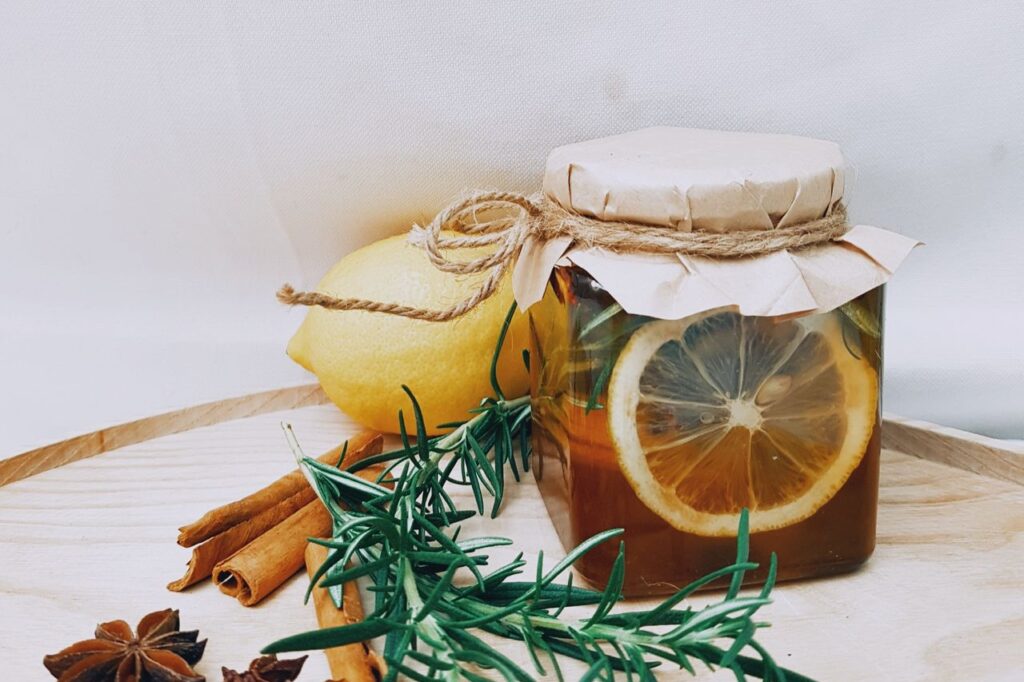
- Ginger honey lemon tea. Simmer fresh ginger slices for 10 minutes before adding lemon and honey. Ginger adds warmth and helps with nausea; see our full ginger tea guide.
- Honey lemon green tea. Brew a green tea bag at 80°C for 2 minutes, then add lemon and honey. The lemon’s vitamin C helps your body absorb more of green tea’s catechins.
- Thyme honey lemon tea. Steep a sprig of fresh thyme (or ½ teaspoon dried) for 5 minutes. Thyme is a traditional cough herb with a pleasantly savoury note.
- Cinnamon and cayenne. A cinnamon stick for sweetness without sugar, and a tiny pinch of cayenne if your sinuses are blocked; capsaicin thins mucus on contact.
- Cold honey lemon water. The same recipe over ice for summer or when you’re feverish and can’t face a hot drink. You lose the heat benefit but keep the honey and lemon.
Does Heating Honey Make It Toxic?
No. Ayurvedic tradition holds that cooked honey is harmful, and the idea circulates widely online, but there’s no evidence that honey stirred into a hot drink is dangerous. What heat does do is destroy some of honey’s enzymes (like glucose oxidase, the source of its hydrogen peroxide) and reduce its antioxidant content, and prolonged high heat raises a compound called HMF that food regulators use as a marker of over-processing. For a cup of tea none of that matters for safety. The practical rule is simple: add honey to warm water rather than boiling water, both to keep more of its beneficial compounds and because you’re going to let the drink cool before you sip it anyway.
When to Drink It (and How Much)

- For a cough: one cup 20–30 minutes before bed is the dose with the best evidence. Add a second cup in the morning if you like.
- For a sore throat: sip small cups through the day; the relief lasts as long as the coating does, roughly 30–60 minutes, so it’s fine to repeat.
- For a cold generally: 2–3 cups a day is plenty. Each cup with a tablespoon of honey adds about 17 g of sugar, so beyond that you’re mainly drinking sweetened water.
- Every day when you’re well: a morning cup is harmless and pleasant, but claims that it “detoxes” or melts fat have no support. Its main daily benefit is that it’s a low-effort way to drink more water.
Side Effects and Who Should Avoid It
- Babies under 12 months must never have honey, hot or cold, because of the risk of infant botulism. This includes honey stirred into tea, on a dummy, or in food.
- Diabetes and blood sugar. Honey is still sugar (about 17 g per tablespoon). Measure it, count it, and consider a teaspoon rather than a tablespoon.
- Tooth enamel. Lemon juice is highly acidic, and warm acid plus sugar is hard on teeth. Drink it in one sitting rather than sipping for an hour, rinse your mouth with plain water afterwards, and wait 30 minutes before brushing.
- Acid reflux. Citrus can trigger heartburn in some people. If it does, cut the lemon in half or swap it for a slice of ginger.
- Pollen or bee allergies. Reactions to honey are rare but possible; stop if you notice itching or swelling in the mouth.
- See a doctor if a cough lasts more than three weeks, you’re coughing up blood, have chest pain or shortness of breath, a fever over 39°C (102°F), or a sore throat that makes swallowing difficult or comes with a rash.
Frequently Asked Questions
Is honey lemon tea good for a sore throat?
Yes. Honey coats the throat and has the strongest evidence of any home remedy for cough, and a hot drink relieves sore throat, chills and tiredness within minutes. It eases symptoms; it doesn’t treat the underlying infection.
Can I drink honey lemon tea every day?
Yes, for most adults one or two cups a day is fine. Watch the sugar from the honey and protect your teeth from the lemon by rinsing with water afterwards.
Does honey lemon tea help you lose weight?
Not directly. There’s no evidence it burns fat or speeds metabolism. If it replaces a sugary soda or latte you’ll save calories, but the honey itself adds about 20 kcal per teaspoon.
Which honey is best for a cough?
Any real honey works. Darker honeys such as buckwheat (used in the Penn State trial) and manuka contain more antioxidants and antimicrobial compounds, but the soothing effect comes mainly from the honey’s thickness and sweetness, which every variety shares.
Is it better with or without tea leaves?
Either. Plain hot water with lemon and honey is caffeine-free and gentlest at bedtime. Brewing it on green or black tea adds catechins and a little caffeine, which some people find helps a stuffy head during the day.
Can children have honey lemon tea?
From 12 months onwards, yes, and it’s a good alternative to cough syrups, which aren’t recommended for young children. Never give honey to a baby under one year. Let the drink cool to warm before serving.
Can I make it in advance?
You can mix lemon juice and honey into a syrup, keep it in the fridge for up to a week, and stir a tablespoon into hot water when needed. Sliced lemons layered with honey in a jar work the same way.
Honey lemon tea or honey and onion syrup for a cough?
Both rely on honey. The tea is faster and more pleasant; honey onion cough syrup is a more concentrated spoonful for a persistent cough. Many people keep both on the go.
More Cold and Cough Remedies
- Home Remedies for Sore Throat — what actually works, ranked by evidence
- Honey Onion Cough Syrup — the concentrated cough remedy
- How to Make Ginger Tea — the warming cold-season cup
- Fermented Garlic Honey — honey’s other winter job
- Homemade Elderberry Syrup — for the cold behind the cough
- How to Use a Neti Pot — for the blocked nose
- Browse all home remedies
This article is for educational purposes only and is not medical advice. Never give honey to a child under 12 months. Consult a qualified healthcare provider for a cough lasting more than three weeks, breathing difficulty, high fever, or if you have diabetes or another condition affected by sugar intake. See our medical disclaimer.
Images by Lisa Fotios, Los Muertos Crew, Vicky Tran and Feyza Daştan via Pexels (free licence).