
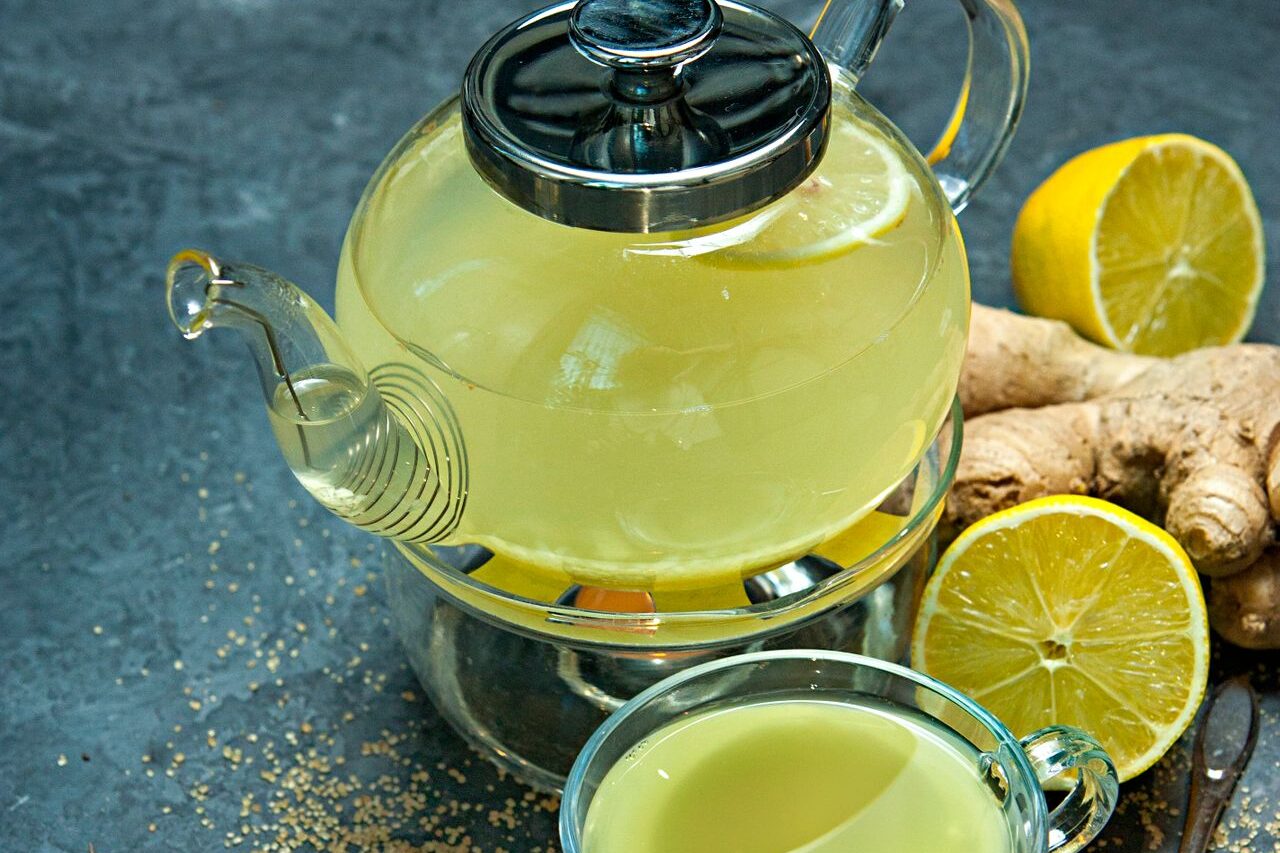
Fresh ginger tea is the remedy everyone’s grandmother reached for first: a mug of hot water, a few slices of ginger root, a squeeze of lemon and a spoonful of honey. It settles a queasy stomach, warms you through on a cold morning, and takes the edge off a scratchy throat. This guide shows you how to make ginger tea from fresh root the right way (most people don’t simmer it long enough), plus a quick grated version, an iced version, a make-ahead concentrate, and a plain-English look at what ginger tea can and can’t do for you.
Ginger Tea at a Glance
| Prep time | 3 minutes |
| Simmer time | 10–15 minutes |
| Servings | 2 mugs |
| Caffeine | None |
| Storage | 3 days in the fridge; concentrate keeps 1 week |
| Best for | Nausea, colds, sore throat, digestion, warming up |
Ingredients
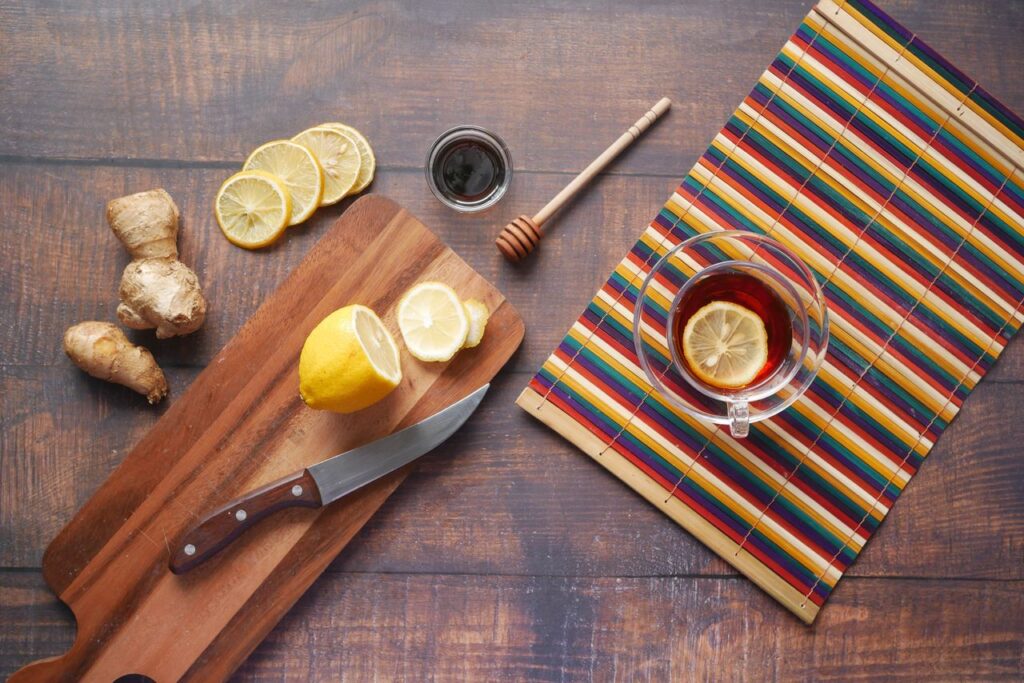
- 2-inch piece of fresh ginger root (about 30 g / 1 oz), scrubbed and thinly sliced. No need to peel if it’s organic and well washed.
- 2½ cups water (it reduces to about 2 cups)
- 1–2 teaspoons honey per mug, or to taste
- Juice of ½ lemon (optional but recommended)
- Optional: 1 cinnamon stick, 3 crushed cardamom pods, a sprig of fresh mint, or ½ teaspoon ground turmeric with a pinch of black pepper
Choosing and prepping ginger
Look for firm, heavy roots with smooth, taut skin; wrinkled or soft ginger is old and will taste flat. Young ginger (pale, thin-skinned) is milder and sweeter; mature ginger is hotter. To prep, scrub under running water and slice into thin coins with the skin on, or scrape the skin off with the edge of a teaspoon. Slicing thinly or crushing the slices with the flat of a knife exposes more surface area and makes a stronger tea. Ginger freezes well: keep a root in the freezer and grate it frozen straight into the pot.
How to Make Ginger Tea with Fresh Ginger
- Slice the ginger. Cut the root into thin coins (about 2 mm). Thinner slices and a quick crush with the side of a knife release more flavour.
- Simmer, don’t steep. Add the ginger and water to a small saucepan, bring to a boil, then lower the heat and simmer, covered, for 10 minutes for a medium tea or 15–20 minutes for a strong, spicy one. Simmering extracts far more gingerol than pouring hot water over slices.
- Strain. Pour through a small sieve into mugs. You can leave the slices in if you like to nibble them.
- Finish. Let it cool for a minute, then stir in lemon juice and honey. Adding honey off the heat keeps its flavour and delicate compounds.
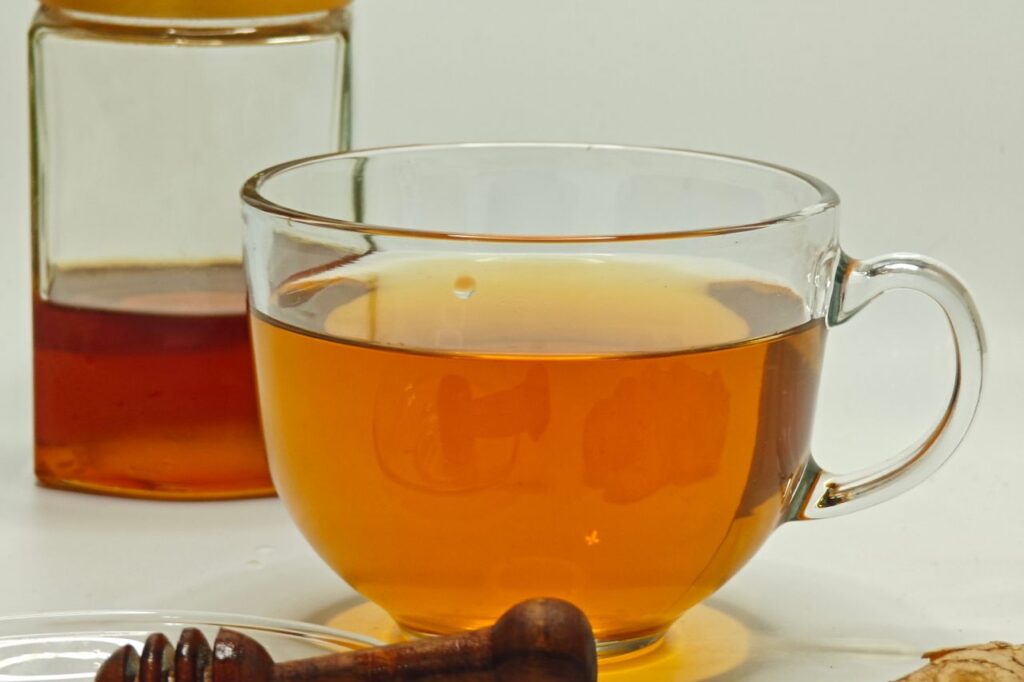
Quick method: grated ginger tea in a mug (5 minutes)
Grate a 1-inch piece of ginger on a fine grater (frozen ginger grates beautifully), put it in a mug or a tea infuser, pour over 1 cup of just-boiled water, cover with a saucer and steep for 5 minutes. Strain if you like, then add lemon and honey. Grating exposes so much surface area that a short steep gives you a decent tea; it’s the best method for one cup at your desk.
Ginger tea concentrate (make-ahead, 8 servings)
Simmer 1 cup of sliced ginger (about 150 g) in 4 cups of water, uncovered, for 30 minutes until reduced by about a third. Strain, cool, and keep in a jar in the fridge for up to a week. To serve, dilute ¼–½ cup of concentrate with hot water (or cold water and ice), then add lemon and honey. It also makes a great base for the fizzy version below.
Variations
- Lemon ginger tea: add 2 thick lemon slices to the simmer and finish with fresh juice. The classic cold-season cup.
- Ginger turmeric tea: add ½ teaspoon ground turmeric (or 1 teaspoon grated fresh) and a pinch of black pepper to the simmer. Anti-inflammatory and beautifully golden; see our golden milk recipe for the milky version.
- Iced ginger tea: make the concentrate, pour over ice, top up with cold water or sparkling water and add a squeeze of lime and a few mint leaves. Like a homemade ginger ale without the sugar.
- Ginger cinnamon tea: add a cinnamon stick to the simmer for a sweeter, warmer tea that needs less honey. Good for blood-sugar-conscious readers.
- Ginger green tea: make the ginger tea, cool it to about 175°F (80°C), then steep a green tea bag in it for 2 minutes.
- Immune-season cup: stir in a teaspoon of fermented garlic honey or a spoonful of elderberry syrup instead of plain honey.
Ginger Tea Benefits: What the Evidence Actually Supports
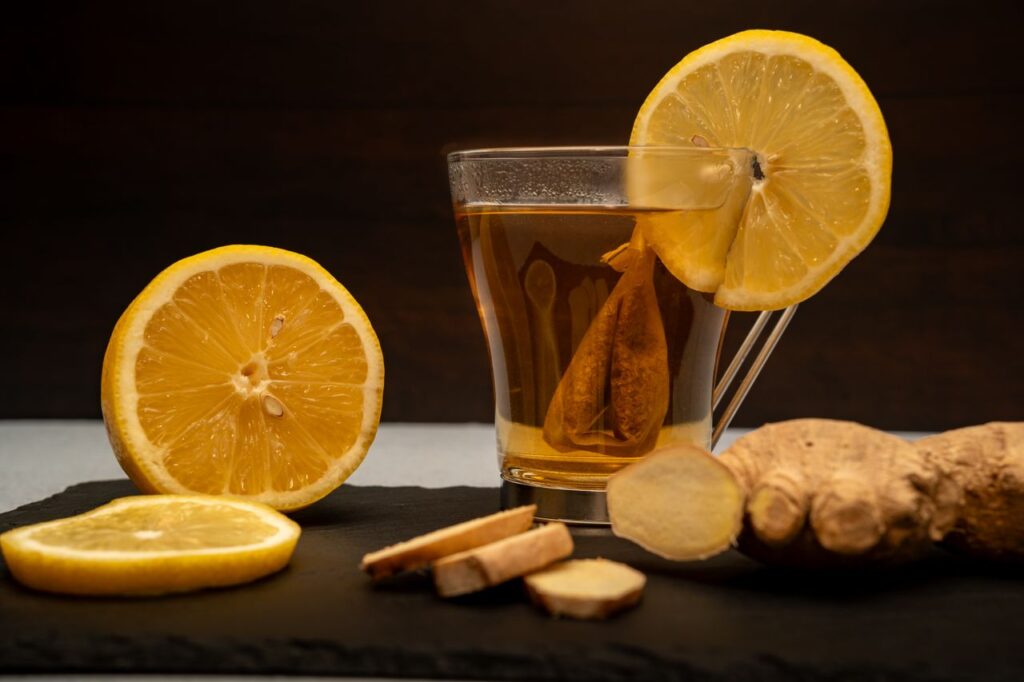
Ginger (Zingiber officinale) contains gingerols and shogaols, pungent compounds with anti-inflammatory and anti-nausea activity. Here’s how the claims stack up:
- Nausea (strong evidence): ginger is one of the few herbal remedies with consistent clinical support. A meta-analysis of 12 trials found ginger significantly reduced pregnancy-related nausea compared with placebo, with no increase in side effects, and trials also support it for motion sickness and post-operative nausea. Most studies used about 1 gram of ginger a day, roughly what a strong mug of fresh ginger tea delivers. For travel, our ginger chews are a portable alternative.
- Period pain (good evidence): a 2024 meta-analysis concluded that ginger reduces menstrual pain, with several trials finding it comparable to ibuprofen when taken for the first 3 days of a period.
- Joint pain (moderate evidence): a meta-analysis in Osteoarthritis and Cartilage found ginger modestly reduced osteoarthritis pain and disability. The effect is real but small.
- Digestion and bloating (moderate evidence): ginger speeds stomach emptying, which is why it helps with that heavy, over-full feeling after a big meal.
- Colds, coughs and sore throats (traditional use): there’s no trial showing ginger tea shortens a cold. What it reliably does is soothe a sore throat, loosen congestion with its warmth and steam, keep you hydrated, and (with honey) calm a cough. That’s a lot of comfort for a three-ingredient drink, even without a cure. The NIH’s ginger summary is a good, balanced read.
How Much Ginger Tea Can You Drink?
For most adults, 2–3 mugs a day, using up to about 4 grams of fresh ginger in total (roughly a 3-inch piece), is considered safe. Pregnant women can generally have up to 1 gram of ginger a day (one strong mug) for nausea, but should check with their midwife or doctor first. Kids over one can have a mild, well-diluted cup with honey; use half the ginger.
Side Effects and Who Should Be Careful
- Heartburn: ginger can trigger reflux in some people, especially strong tea on an empty stomach. Make it milder or drink it after food.
- Blood thinners: ginger has mild antiplatelet effects. If you take warfarin, aspirin or clopidogrel, or have surgery scheduled, ask your doctor before drinking it daily.
- Diabetes and blood-pressure medication: ginger may lower blood sugar and blood pressure slightly; monitor if you’re on medication.
- Gallstones: ginger increases bile flow; check with your doctor if you have gallbladder disease.
- Honey and babies: never give honey to a child under 12 months.
Frequently Asked Questions
How long should I boil ginger for tea?
Simmer sliced ginger for 10 minutes for a medium tea and 15–20 minutes for a strong one. Steeping slices in hot water without simmering gives a much weaker tea; if you only have a mug and a kettle, grate the ginger instead and steep for 5 minutes.
Do I need to peel ginger for tea?
No. The skin is thin, edible and full of flavour. Scrub it well and slice. Peel only if the skin is thick, dry or bruised.
Can I use ground ginger instead of fresh?
Yes: use ¼ teaspoon of ground ginger per cup of hot water, whisk well and steep for 3 minutes. It’s more pungent and less bright than fresh, so add extra lemon. Ground ginger is also more concentrated, so don’t exceed ½ teaspoon per cup.
Is it OK to drink ginger tea every day?
Yes for most people. Two to three mugs a day is well within safe limits. If you take blood thinners, have gallstones or get heartburn easily, talk to your doctor or keep it mild.
When is the best time to drink ginger tea?
Morning on an empty stomach if you wake up queasy (a classic for morning sickness), after meals for digestion, or in the evening for a caffeine-free warm drink. There’s no wrong time; it contains no caffeine.
Can I reuse the ginger slices?
Yes, once. A second simmer gives a milder tea. After that, chop the softened slices into a stir-fry or compost them.
Does ginger tea help you lose weight?
Not meaningfully on its own. Some small studies show ginger slightly increases feelings of fullness and thermogenesis, but the effect is tiny. Its real value for weight is as a satisfying, zero-calorie replacement for sugary drinks.
Why does my ginger tea taste bitter?
Old ginger, too much lemon pith, or boiling hard for a long time can all add bitterness. Use fresh, firm root, simmer gently with the lid on, and add lemon juice (not whole slices) at the end.
More Warming Remedies
- Homemade Ginger Chews — portable nausea relief for travel
- Golden Milk Recipe — the turmeric bedtime drink
- Honey Onion Cough Syrup — an overnight remedy for tickly coughs
- Homemade Elderberry Syrup — sweet, kid-friendly immune support
- Fire Cider Recipe — the spicy vinegar tonic for stuffy heads
- Browse all home remedies
This article is for educational purposes only and is not medical advice. Consult a qualified healthcare provider before using ginger or any herbal remedy therapeutically, especially if you are pregnant, breastfeeding, have a medical condition, or take medication. See our medical disclaimer.
Images by Galiya Tenisheva, Towfiqu Barbhuiya, Masuma Rahaman and Gundula Vogel via Pexels (free licence).